
My very first “closet bathroom” was in a prewar walk-up with exactly one tiny window and a vanity that felt like it was hugging me back. I could not move plumbing, I could not tile over anything, but paint was fair game. And once I started treating color like a lighting tool instead of “just decor,” the whole room stopped feeling like a box.
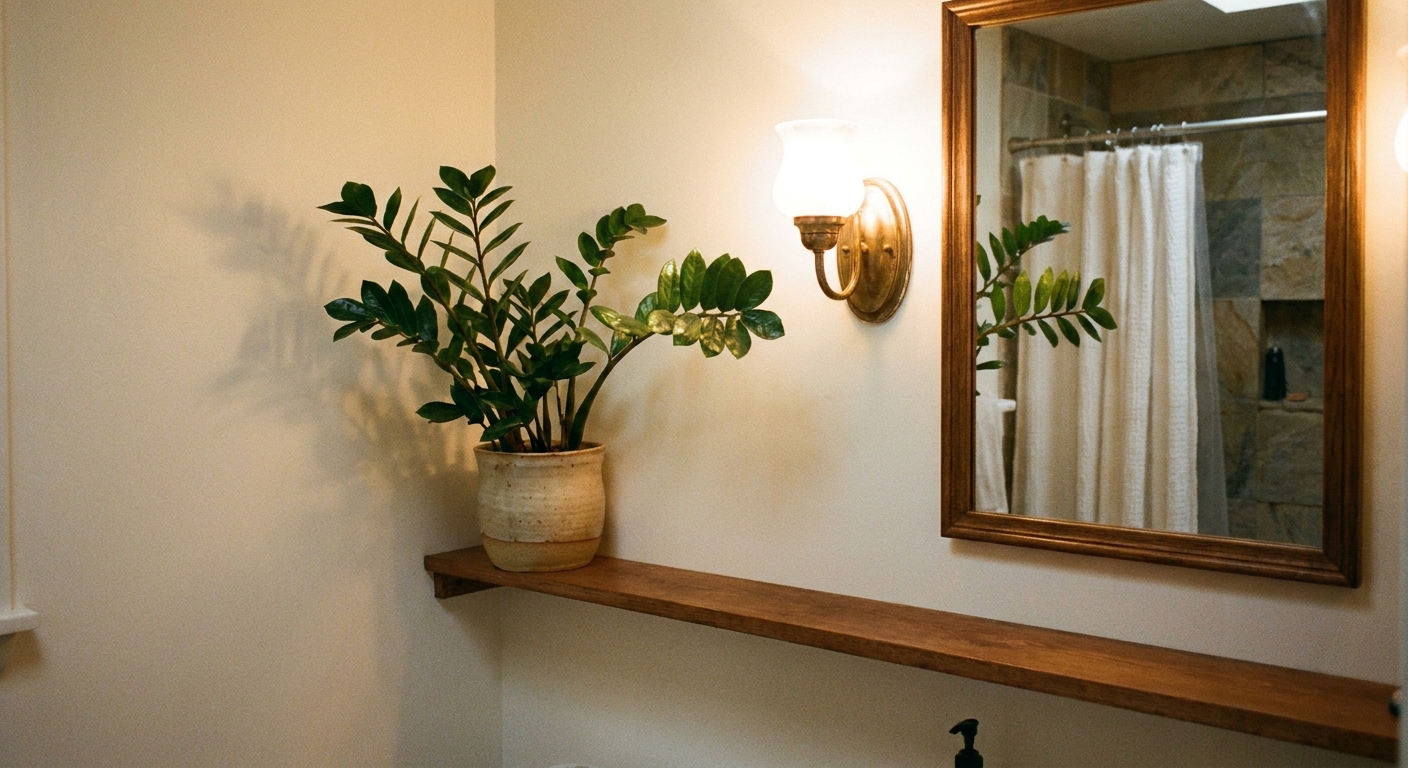
Below are seven paint palettes that designers often lean on for small spaces because they can help reflect light, soften hard edges, and create a calmer visual flow. Results still depend on your existing light, your finishes, and your paint choice, but these are reliable directions when you want “bigger and brighter” without remodeling.
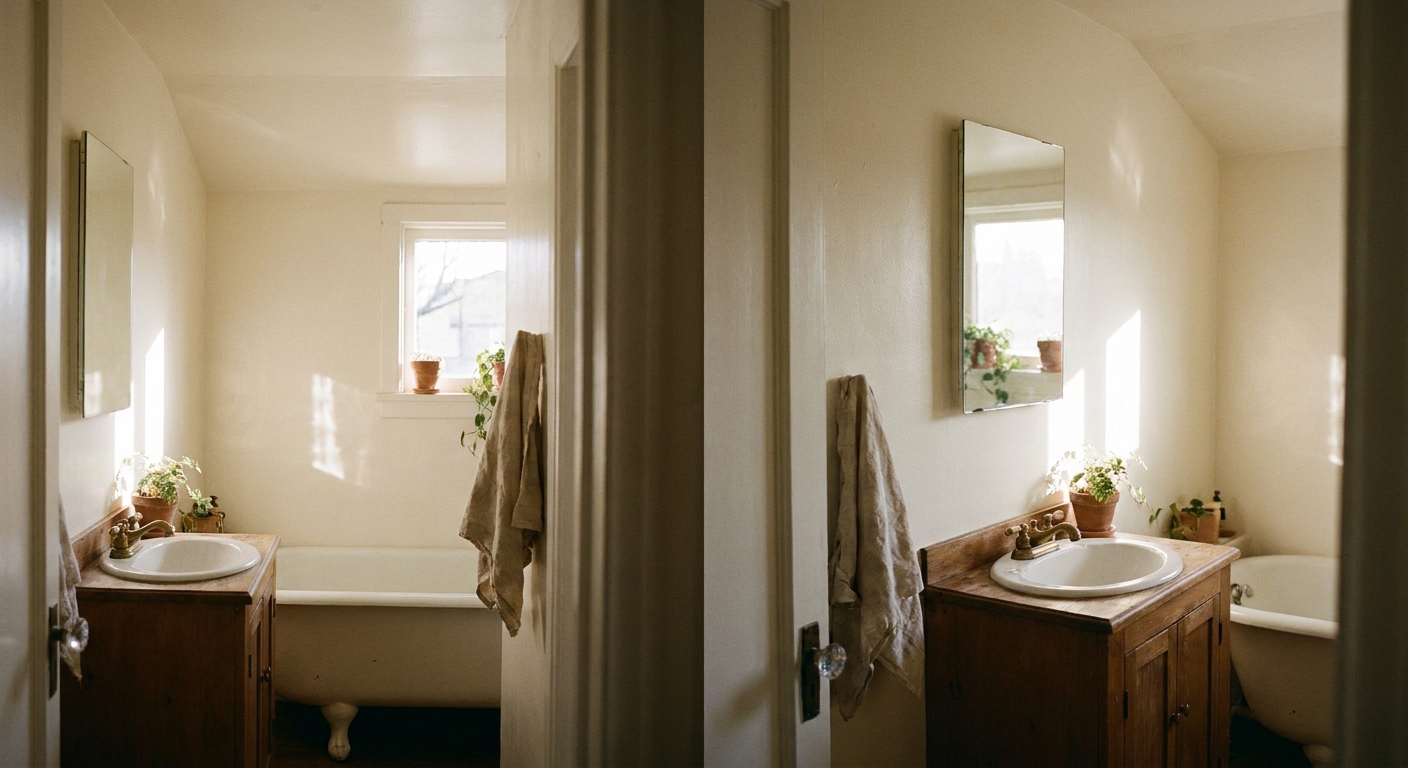
Before you pick a palette: 5 paint rules
- Match undertones to your fixed finishes. Check your tile, tub, and countertop for warm (cream, beige, yellow) or cool (blue, gray) undertones. Your paint should agree with them, not fight them.
- Use fewer stops for your eyes. In a small room, contrast can read as clutter. Similar values (lightness levels) help walls feel farther away.
- Choose the right sheen. Most tiny bathrooms do best with satin or eggshell on walls for wipeability. Use semi-gloss on trim if you have it. Flat can look beautiful, but it is harder to clean and can hang onto moisture marks.
- Use a bathroom-rated formula when you can. If your bath gets steamy or your fan is weak, look for a kitchen and bath paint or a mildew-resistant option. Also, ventilate well and give paint time to cure before long, hot showers.
- Do a real-life test. Bathrooms change dramatically morning to night. Paint a big swatch near the mirror and near the shower and live with it for 48 hours.
Palette 1: Warm white + creamy trim
Why it works: Warm whites bounce light without turning icy, and the gentle warmth usually makes skin tones look better in the mirror. Keeping trim slightly creamy instead of stark white can prevent that choppy outline that can shrink a small room.
Use this if
Your bathroom has beige tile, an off-white tub, or warm metal finishes like brass and champagne.
How to apply it
- Walls: soft warm white (think “white with a drop of beige”)
- Trim and door: the same color in semi-gloss, or a matching white that is one step creamier or slightly lighter
- Ceiling: same color as the walls for a seamless, taller feel
Styling tip: Pair with a fabric shower curtain that has subtle texture, not a loud print. If your current curtain feels busy, try a simple upgrade from my guide on making a shower curtain look expensive and custom.
Palette 2: Off-white + pale greige
Why it works: Greige (a gray-beige blend) gives you definition without harsh contrast. In tiny bathrooms, a whisper of depth can make surfaces feel layered instead of flat, which reads as “designed” rather than “small.”
Use this if
Your bathroom has mixed finishes you cannot change, like warm floor tile with a cooler vanity top.
How to apply it
- Main walls: off-white (neutral, not too yellow)
- Vanity wall or lower half: pale greige (beige-forward, with a soft gray cast)
- Trim: a gentle crisp white that does not look blue next to your off-white
Placement trick: If you have a long, narrow bathroom, put the greige on the short wall at the end. It can add depth without making the room feel darker.
Palette 3: Misty blue-gray + bright white
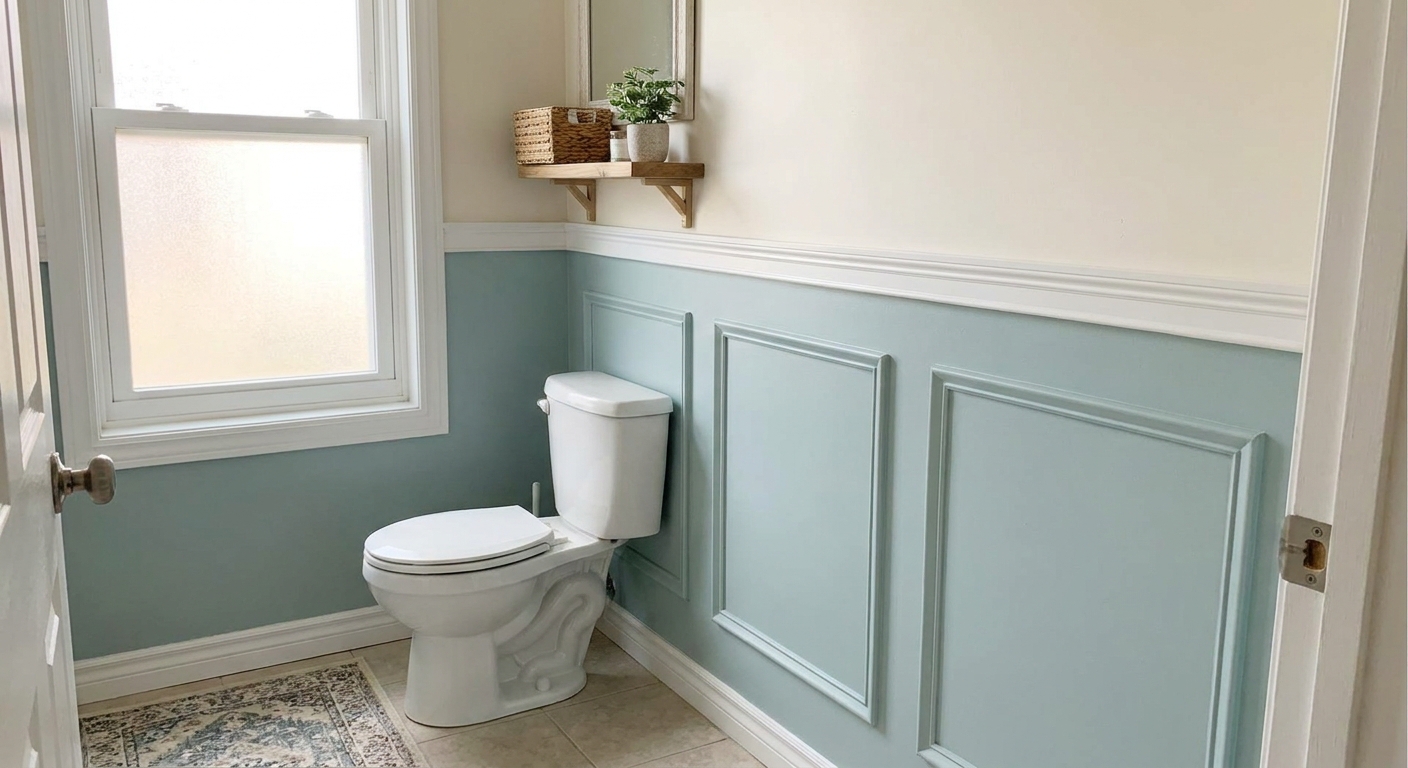
Why it works: A softened blue-gray can read like daylight. It is calming, it recedes visually, and it makes white fixtures look intentionally crisp.
Use this if
You have a lot of white already (white tub, white toilet, white sink) and want the room to feel less sterile without going dark.
How to apply it
- Walls: misty blue-gray (blue-gray with a hint of softness, not a sharp steel tone)
- Ceiling: bright white, or the same wall color one shade lighter if your paint store offers a lighter mix
- Accents: white towels, chrome, glass
Small-space bonus: This palette is fantastic with a mirror upgrade. If you are stuck with a builder-grade mirror, I have a renter-friendly method in how to upgrade a builder-grade mirror without removing it.
Palette 4: Pale sage + warm white
Why it works: Light sage has gray in it, so it behaves like a neutral, but it brings life to a bathroom that feels flat. It also plays well with natural textures like bamboo, linen, and stone-look tile.
Use this if
You want color, but you are nervous about going too bold in a small room.
How to apply it
- Walls: pale sage (a muted green with a gray base, not a bright mint)
- Trim and ceiling: warm white
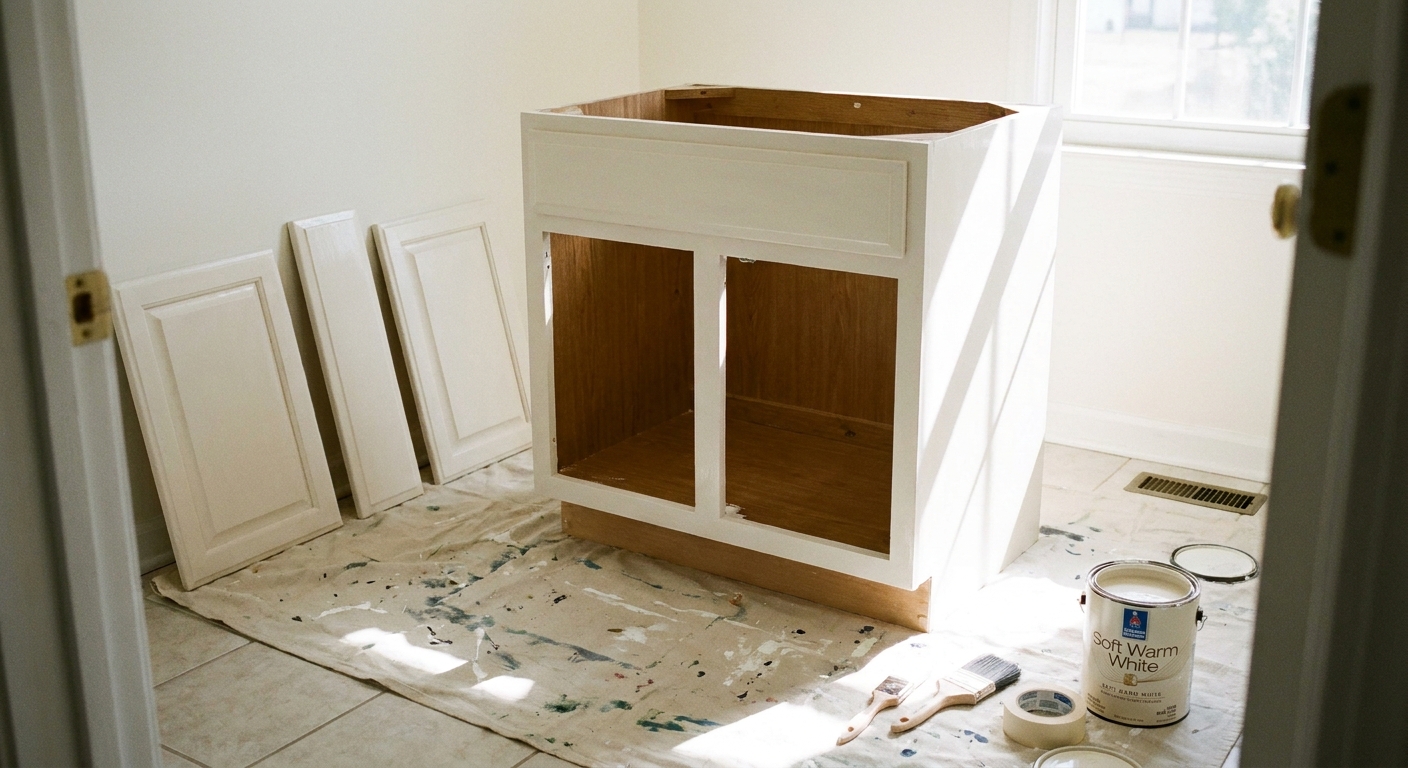
- Optional: paint the vanity the same sage for a built-in look
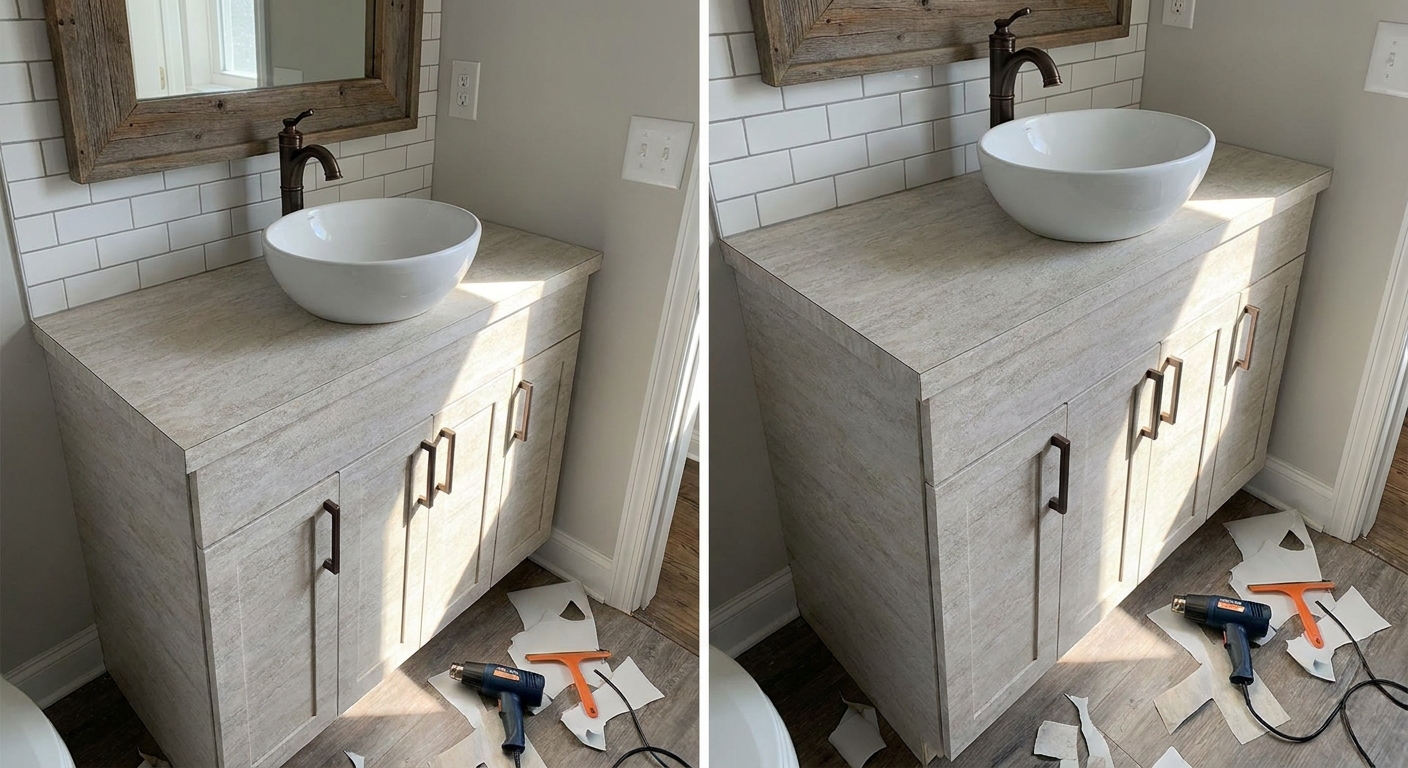
Renter note: If painting the vanity is allowed, do it. If it is not, consider a removable finish. My step-by-step on the safer option is wrapping a vanity with water-resistant contact paper.
Palette 5: Light taupe monochrome
Why it works: This is my favorite “tiny bath cheat.” Painting everything one light, warm-neutral color can erase corners and trim breaks, so your eye reads the space as larger and calmer.
Use this if
Your bathroom has lots of awkward angles, soffits, or too many little bump-outs. Monochrome helps them disappear.
How to apply it
- Walls, trim, and ceiling: the same light taupe (a warm neutral that is not muddy)
- Sheen strategy: satin on walls, semi-gloss on trim in the same color for gentle dimension
What to avoid: High-contrast black hardware everywhere. If you want a punch, keep it to one or two pieces, like a faucet or towel bar.
Palette 6: Creamy white + blush-beige
Why it works: A blush-beige reads flattering and bright, especially under warm bathroom bulbs. It does not look “kid room” when it stays muted and beige-forward.
Use this if
Your bathroom lighting is warm (many apartments are) and you want the room to feel softer and more spacious.
How to apply it
- Main walls: creamy white
- Accent zone: blush-beige behind the vanity, or on the lower third of the wall
- Trim: creamy white
Design trick: If you do an accent, keep it broad and simple. Tiny stripes or busy shapes can make a tiny bathroom feel busier.
Palette 7: Soft white + deep accent
Why it works: Yes, dark colors can work in small bathrooms. The key is placement. A single deep accent can create depth, while the rest of the room stays light and reflective.
Use this if
You want personality, or your bathroom has one wall that is visually messy (pipes, odd niches, an awkward door) and you would rather make it intentional.
How to apply it
- Most walls: soft white
- One wall: deep, moody color (inky green, charcoal, deep navy)
- Ceiling: soft white
Best accent walls in a tiny bath: the wall behind the toilet, or the wall behind the vanity. If natural light is limited, the safest move is to avoid making the window wall your only dark wall.
Painting checklist for a smooth finish
- Unify the white stuff. If your ceiling is a totally different white than your trim, pick one white family and simplify.
- Paint the vent cover and radiator. Yellowed plastic and old metal visually shrink a room because they interrupt the clean field of color. If yours is dingy, see how to fix a yellowed bathroom exhaust fan cover without rewiring.
- In windowless bathrooms, play it safe with light values. You can absolutely do color, but lighter palettes (like 1 through 5) are the easiest way to keep things feeling open. Add personality through texture and a great shower curtain.
- Use good bulbs, matched in color. Paint cannot do its job under harsh, mismatched lighting. Warm-neutral LEDs around 2700K to 3000K are a common sweet spot, but if you do makeup and want a cleaner look, 3500K can be more flattering in some bathrooms. Aim for a high CRI (90+) if you can, especially near the mirror.
Quick FAQs
Should I paint the ceiling the same color as the walls?
In a tiny bathroom, often yes. It removes a visual lid and can make the room feel taller. If you love a crisp ceiling, keep the ceiling just one step lighter than the walls, not a totally different white.
What is the best paint finish for a small bathroom?
Satin or eggshell for walls is my default because it wipes clean and still looks soft. If your walls are imperfect, satin can highlight texture, so eggshell may be more forgiving. In very steamy bathrooms, a kitchen and bath paint or a slightly higher sheen can hold up better.
What if my landlord only allows white?
Use the palette idea anyway by choosing a specific white undertone (warm, neutral, or cool) that suits your tile. Then add “palette” through towels, a bath mat, and a shower curtain.
If you want one fast win after painting, do a clutter pass. A small bathroom painted beautifully still feels cramped if the counter is crowded. My easiest reset is decluttering and organizing your medicine cabinet, because it clears the visual noise in the spot you look at most.