
The fastest way to make a small bathroom feel “done” is to treat the shower curtain like it belongs in a boutique hotel, not a bargain bin. I learned this the hard way in my first tiny vintage apartment, where the curtain was the biggest surface in the room and also the saddest. The good news is you do not need a designer curtain or a custom rod to get that polished, tailored look. You just need a few strategic tweaks.
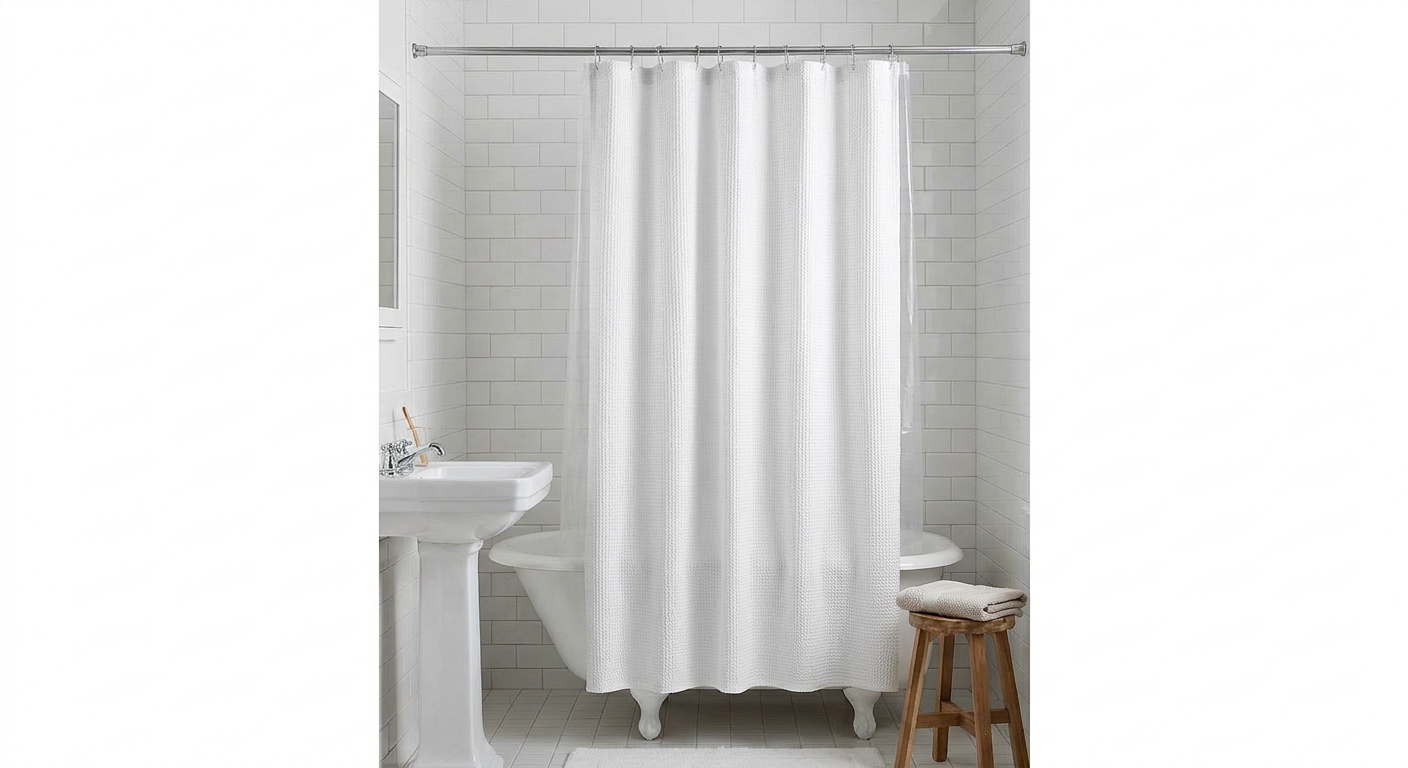
1) Raise the rod
This is my number one “instant custom” trick, especially in tight bathrooms where everything feels visually cramped. Hanging your curtain closer to the ceiling creates the illusion of taller walls and a larger shower opening.
- For tension rods: You can usually set it a few inches above the top of the tile line, as long as it stays secure. In humid bathrooms and on glossy tile, tension rods can slip, so do a quick daily check for the first week and do not overextend past the manufacturer’s limit. If it wants to slide, add non-slip pads made for tension rods.
- For mounted rods: If you cannot move brackets, fake height by choosing a longer curtain length.
What lengths to look for: The most common curtain lengths are 72 inches (standard), 78 inches (a little taller), and 84 inches (dramatic, and not always practical in bathrooms).
Hem placement tip: For the most livable “tailored” look, aim for the outer fabric curtain to hover about 1 inch above the floor. If your bathroom stays very dry and you love the luxe look, you can go closer, but avoid fabric sitting in standing water or catching every mop and splash.
2) Go wider
A skimpy curtain reads “temporary.” A fuller curtain reads “custom.” Even if your shower opening is narrow, extra width creates soft folds and that expensive, hotel-like drape.
- For a typical 60-inch tub and shower alcove, consider a curtain labeled extra-wide for more drape.
- If you are stuck with a basic size, cheat fullness by using two matching curtains on the same rod, slightly overlapped in the middle.
Quick reality check: Two panels look great, but they are heavier and can be fussier to slide. Plan on extra rings or hooks, and make sure your rod is sturdy enough to handle the added weight without sagging. Overlap the panels enough that you do not get a bright “gap” down the center.
If you want to make the opening feel even larger, mount the rod (or set the tension rod) a little wider than the tub edges. Just keep the ends close enough to the wall that water does not escape.
3) Layer with a liner
Layering is where the “custom” vibe really happens. The key is to treat the liner like an invisible workhorse, not a crinkly afterthought.
My low-cost layering formula
- Outside: a fabric curtain (waffle weave, cotton look, or a heavy polyester that mimics linen)
- Inside: a clear or white liner that is sized and positioned to hang inside the tub
Quick fit check: The liner should hang inside the tub and stop a few inches above the floor. That keeps it from wicking water and getting that grimy bottom edge.
If your bathroom is very humid, keep an eye on how materials hold up. My notes on moisture and adhesion might help if you are also styling with temporary finishes: Peel-and-stick wallpaper in small bathrooms: will it survive humidity?
4) Upgrade the rings
Those cloudy plastic rings are a dead giveaway. The cheapest “expensive” switch is swapping to better-looking rings. You do not need anything fancy, just something that looks intentional.
- Brass tone or matte black rings: instantly reads more elevated.
- Roller hooks: make opening and closing smoother, and they look more like a permanent fixture.
- Matching finishes: try to echo your faucet, showerhead, or cabinet hardware finish.
If the rest of your hardware is builder-grade, you can still coordinate on a budget. I keep a running list of cheap upgrades that look surprisingly high-end here: 5 reversible ways to upgrade cheap bathroom cabinet hardware.
5) Pick a quiet fabric
In small bathrooms, a shower curtain is basically a wall. If the pattern is too busy or the fabric looks thin, it can overwhelm the whole room. Instead, aim for texture and structure.
What looks expensive, even on a budget
- Waffle weave: classic hotel texture and hides wrinkles well.
- Subtle stripes: reads crisp and tailored without visual clutter.
- Solid white, ivory, or soft greige: makes the room feel brighter and larger.
- Linen-look polyester: often drapes better than cheap cotton and handles humidity.
What to avoid if you want custom: super shiny fabric, ultra-thin material that clings, and high-contrast tiny prints that can look noisy in a compact space.
6) Steam and weight it
Wrinkles scream “straight out of the package.” Five minutes of prep makes a budget curtain look tailored.
- Steam: A handheld steamer is easiest, but a hot shower can help relax light wrinkles if you tug and smooth while it hangs.
- Hem weights: Add small curtain weights, weighted hem tape, or clip-on weights to help it hang straight. If your tub is metal, magnets can work, but many tubs are acrylic or fiberglass, so weights are the more reliable fix.
- Train the folds: Once it is hanging, pinch the curtain into even pleats and let it sit that way for a day. It “learns” the drape.
This trick is especially helpful if you doubled up curtains for extra fullness.
7) Style the area
A shower curtain looks most expensive when the area around it is styled like a finished vignette. You do not need to buy a bunch of decor, just tighten what is already in the visual zone.
- Keep bottles contained: corral shampoos in a rust-resistant organizer so the curtain looks like a design choice, not a cover-up. If your tub is tiny, start here: Best rust-resistant shower organizers for tiny bathtubs.
- Match one metal: pick one finish to repeat (black, brass, chrome). Rings, a caddy, and a towel hook in the same family looks intentional.
- Swap the showerhead if needed: a nicer spray face instantly upgrades the whole “shower moment,” and it is usually renter-friendly: Swap your showerhead without losing your deposit.
Optional but helpful: A curved shower rod can add elbow room and keep the curtain from clinging, but it also changes how much fabric you need to look “full.” If you switch rod styles, re-check your width so the curtain still drapes in generous folds.
Even just clearing the tub ledge and keeping the curtain centered does a lot of heavy lifting.
Quick sizing cheat sheet
If you are standing in the aisle trying to decide between lengths and widths, here is the simple way I choose.
| What you want | What to look for | Why it works |
|---|---|---|
| More height | 78 inch or 84 inch length, or a higher rod | Makes ceilings feel taller |
| More “custom” drape | Extra-wide, or two panels | Creates fuller folds like window drapery |
| Cleaner liner edge | Liner shorter than the fabric curtain | Keeps the bottom from getting grimy |
| A no-guess example | If your rod sits around 75 inches from the floor, try a 78 inch curtain | Gets you that near-floor look without dragging |
Troubleshooting
It balloons into the shower
- Use a liner with weights, or add weighted hem tape or clip-on weights to the bottom corners.
- A curved rod can help by giving the liner more room.
- Running the bathroom fan can help reduce weird air currents in some bathrooms, but weights are the most direct fix.
The bottom always looks dirty
- Shorten or replace the liner more often than the outer curtain.
- Keep the liner inside the tub and avoid letting it puddle.
- After showering, pull the curtain more closed so it dries evenly, and wash the fabric curtain on a regular schedule so it stays crisp.
It looks skimpy
- Go wider, or add a second matching panel.
- Use rings that glide easily so you actually keep it closed in nice folds.
The takeaway
If you do nothing else, raise the rod, add fullness, and swap the rings. Those three changes take a basic shower setup from “rental standard” to “custom enough that guests assume you measured for it.” And in a small bathroom, that one polished backdrop makes everything else feel more intentional.