
In my first tiny apartment bathroom, I bought the classic metal shower caddy, hung it over the showerhead, and felt very grown-up for about two weeks. Then the rust showed up, my bottles started slipping, and I realized the “easy” solution is not always the small-space solution.
If your tub is petite, your ledge is basically a rumor, and you want something that stays clean-looking, these are the rust-resistant organizers I actually recommend. We are comparing three renter-friendly styles that work in real, cramped bathtubs: corner tension poles, hanging caddies, and adhesive baskets.
What rust-proof really means
Quick truth: “rust-proof” is mostly about material, finish quality, and drainage. In a steamy tub-shower, even a tiny chip in a coating can turn into a rust freckle.
Also worth knowing: some “rust” you see on shower caddies is actually hard-water mineral scale (chalky white or dull gray spots). True rust usually looks orange-brown and tends to spread from scratches, joints, and weld points.
Materials that stay rust-resistant
- Plastic (ABS or polypropylene): The closest thing to truly rust-proof. Light, easy to wipe down, and great for adhesive shelves and some hanging caddies.
- Anodized aluminum: Does not rust like steel. It can pit or spot over time in harsh water, but it is a strong choice for tension poles and frames.
- 304 stainless steel: More corrosion resistant than basic stainless. It is not indestructible, but it holds up far better than chrome-plated steel.
- Powder-coated steel: Can last if the coating stays intact. If you see chips or scratches, it is on borrowed time in a wet shower.
Red flags on the product listing
- “Chrome” with no mention of stainless steel or aluminum. “Chrome finish” is often a plating over steel on budget caddies.
- Very thin wire construction where coating wears at contact points.
- No drainage holes or a flat shelf that holds puddles. Standing water is the enemy.
Quick comparison
| Type | Best for | Rust resistance | Space impact | Renter-friendly |
|---|---|---|---|---|
| Corner tension pole | Lots of products, families, shared showers | High if aluminum or plastic shelves | Uses vertical corners, minimal footprint | Usually great, no drilling |
| Hanging caddy | Minimalists, quick setup, showerheads with space | Varies widely, plastic is safest | Can feel bulky in a tiny tub | Great, but can scuff fixtures |
| Adhesive baskets | Very small tubs, low visual clutter, custom layout | High if plastic or stainless plus good adhesive | Best for staying out of your elbow space | Great if removed carefully |
1) Corner tension poles
If you share a shower or use full-size bottles, a corner tension pole is the easiest way to get serious storage without eating up tub space. It turns a dead corner into vertical real estate.
What makes a tension pole rust-resistant
- Anodized aluminum pole or a pole clearly labeled corrosion resistant.
- Plastic shelves or thick, well-finished stainless shelves.
- Wide drainage slots so water does not sit under bottles.
- Grippy feet and a strong top spring so it does not slowly slide down and start wobbling.
My tiny-tub fit tips
- Choose shelves you can move. You will want one shelf low for shaving, and higher shelves for tall bottles.
- Avoid huge corner baskets if your tub is narrow. Deep shelves can poke into your showering space and feel claustrophobic fast.
- Look for stable contact points. Depending on the design, the pole may brace floor-to-ceiling or tub ledge-to-ceiling. Either way, you want a stable, non-slip surface at both ends.
Best for: Anyone who wants one organizer to handle almost everything, especially in a tub-shower used daily.
Not ideal for: Very uneven tile corners, super narrow tubs where any corner shelf feels intrusive, or showers where you hate “stuff” in your sightline.
2) Hanging caddies
Hanging caddies are popular because they are instant, and if you move often, you can pack them up in two seconds. In a tiny bathtub, though, you need one that sits stable and drains well, or it becomes a swinging clutter chandelier.
Pick the right hanging style
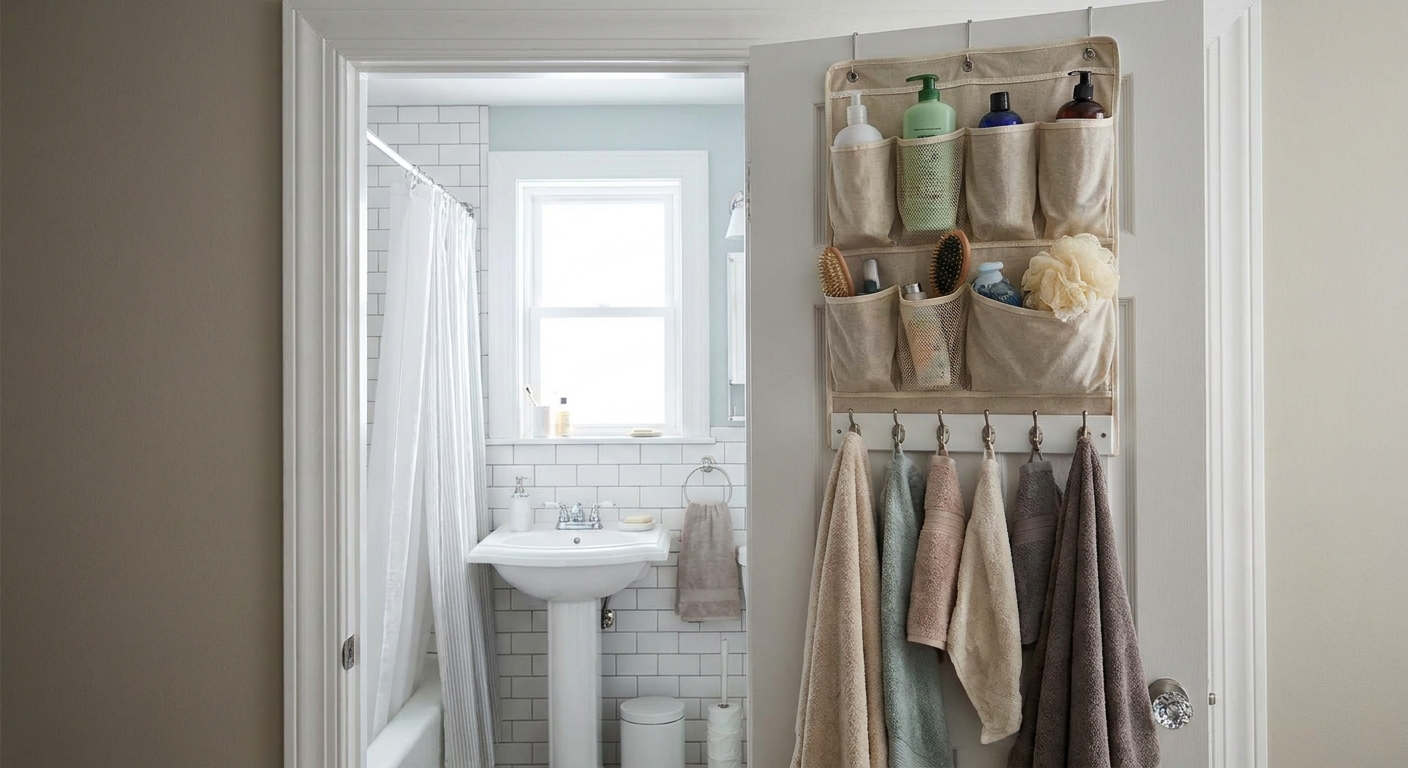
- Over-showerhead hook: easiest, but it can wobble and crowd your shower stream.
- Over-the-shower-door hook: works for framed or frameless glass doors, but check clearance so it does not scrape the frame.
- Over-the-shower-arm or towel-bar hanger: helpful when your showerhead sits low or tight to the wall.
- Suction-stabilized hanging: the most stable option when done well, especially if the suction cups are large and the surface is smooth.
What to buy for rust resistance
- All-plastic hanging caddy if you want the safest no-rust choice.
- If metal, look for 304 stainless steel and avoid thin chrome wire.
- Removable soap dish inserts you can dump and rinse. Soap sludge is what makes caddies feel grimy.
Make it look less cluttered
- Decant into matching bottles so you are not staring at five loud labels.
- Limit it to daily use items only. Store backups outside the shower. Your shower should feel calm, not like a pantry.
Best for: Renters who move frequently and want no-install storage.
Not ideal for: Super low showerheads, showerheads mounted close to the wall, or anyone who hates movement and noise.
3) Adhesive baskets
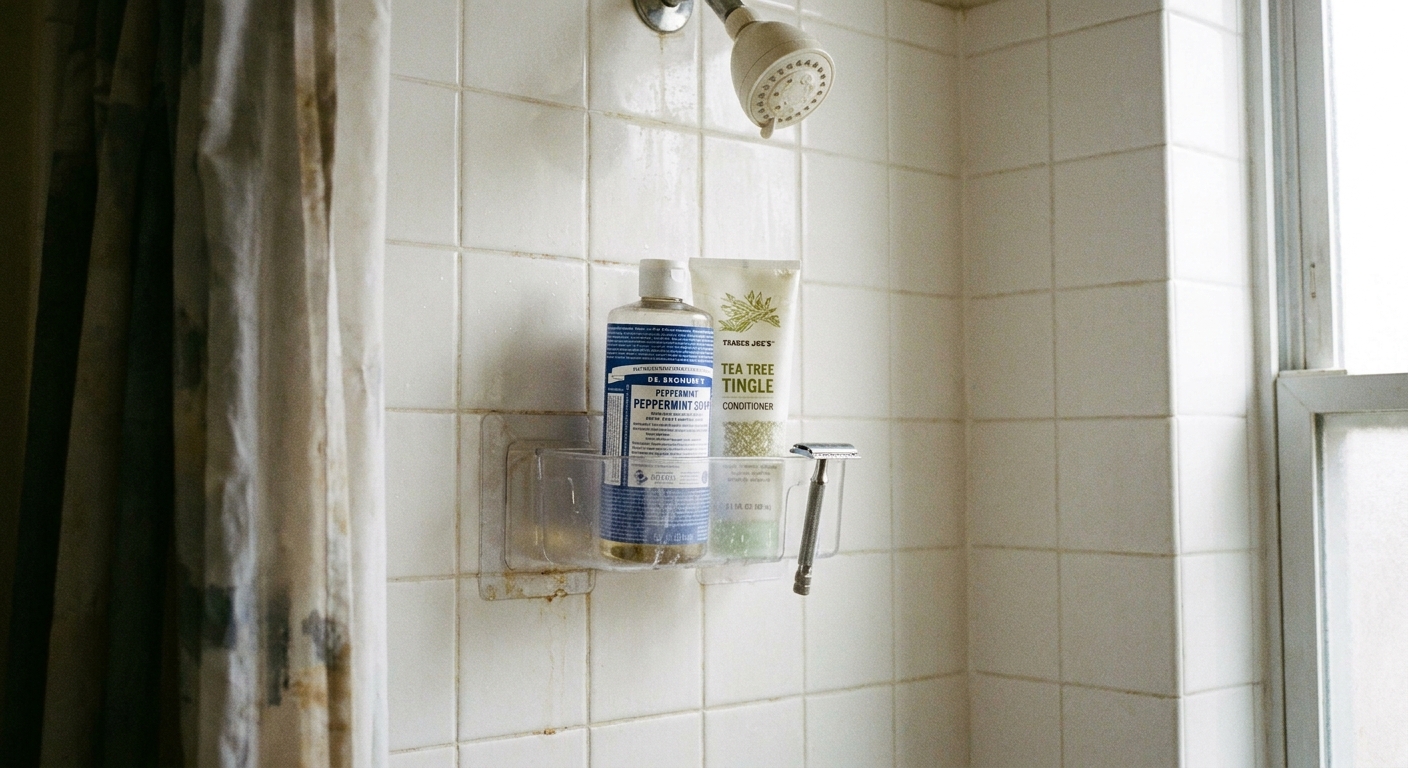
If your tub is narrow, adhesive baskets are usually the cleanest-looking option because you can place them exactly where your body is not. One basket for bottles, one for razors, one for washcloths, and suddenly your shower feels bigger.
What to look for
- Waterproof adhesive strips or mounting plates designed for humid environments.
- Plastic or stainless baskets with open wire or slots for drainage.
- Raised edges so bottles do not slide off when you bump the shelf.
- Weight rating that matches reality. A shelf loaded with full-size shampoo, conditioner, and body wash gets heavy fast.
Where they work best
- On smooth tile and glossy surfaces that you can fully degrease.
- A few inches away from direct spray when possible. Constant pounding water can shorten adhesive life, depending on the adhesive and cure time.
Where to be careful
- Painted walls or drywall: adhesives can pull paint or paper facing during removal. In most showers, I would stick to tile, fiberglass, or another slick, sealed surface.
- Textured tile or natural stone: less contact area means more failures.
- Crumbling grout lines: adhesives do not fix a weak surface.
My install method
- Clean with dish soap and water, then dry.
- Degrease with rubbing alcohol and let it fully evaporate.
- Press and hold as directed, then wait the full cure time before loading it. Most failures are impatience, not bad adhesive.
- Start light for the first day, then add heavier bottles once you trust it.
Best for: The smallest tubs, anyone who wants a minimal look, and people who hate the over-showerhead “crowded” feeling.
Not ideal for: Textured tile, fragile grout, or surfaces with constant soap film you cannot keep clean.
Keep it looking new
Even rust-resistant materials can look grimy if water and product build up. These tiny habits keep your organizer fresh with minimal effort.
- Weekly rinse and shake: Take bottles off, rinse the shelf, and shake out trapped water.
- Monthly deep clean: Warm water plus a drop of dish soap, then wipe dry. Drying matters more than people think.
- Skip abrasives: Avoid steel wool and gritty scrub powders on stainless or anodized aluminum. Scratches can invite staining and corrosion over time.
- Watch for trapped water zones: If a shelf design holds puddles, swap it. Drainage is the whole game.
- Use fewer bottles: One good shampoo beats three half-used ones. Your shower will feel larger fast.
My pick by situation
- I want maximum storage with zero drilling: a corner tension pole with plastic shelves and big drainage openings.
- I move a lot and want grab-and-go: an all-plastic hanging caddy, or stainless with suction stabilization.
- My bathtub is tiny and I want it to feel spa-clean: adhesive baskets placed up and out of your elbow zone.
If you are working on the rest of your bathroom storage too, you will probably like my renter-friendly vertical ideas in 7 Damage-Free Wall Storage Hacks for Rented Bathrooms and my strategy for keeping the “open storage” look tidy in Over-the-Toilet Storage That Won’t Look Cluttered. For the full small-bathroom rabbit hole, browse Storage & Organization.
FAQ
Do stainless steel shower caddies rust?
Higher-quality stainless (often labeled 304) is very corrosion resistant, but in a constantly wet shower it can still spot or discolor, especially in hard water. It holds up far better than chrome-plated steel. Good drainage and regular wipe-downs help a lot.
Will adhesive shower organizers damage tile?
They can if you rip them off quickly. Removal is usually safest with gentle heat (like a hair dryer) and slow peeling. If your tile or grout is already fragile, test in an inconspicuous spot first.
Are tension poles safe for renters?
Typically yes, since they rely on pressure rather than screws. To be kind to your surfaces, keep the end caps clean, avoid overtightening, and check stability periodically.