
The first apartment bathroom I ever “decorated” was basically a tiled closet with a door that swung in and stole half the floor. I could not add a cabinet, I could not drill into the walls, and I definitely could not keep my daily stuff balanced on the sink like a game of Jenga. The fix that changed everything was using the back of the bathroom door like a hidden storage wall.
If your bathroom is short on drawers, shelves, and sanity, this is one of the most underused surfaces in the whole room. Here is how I plan it and install it so it looks intentional, stays quiet, and does not wreck your paint or your deposit.
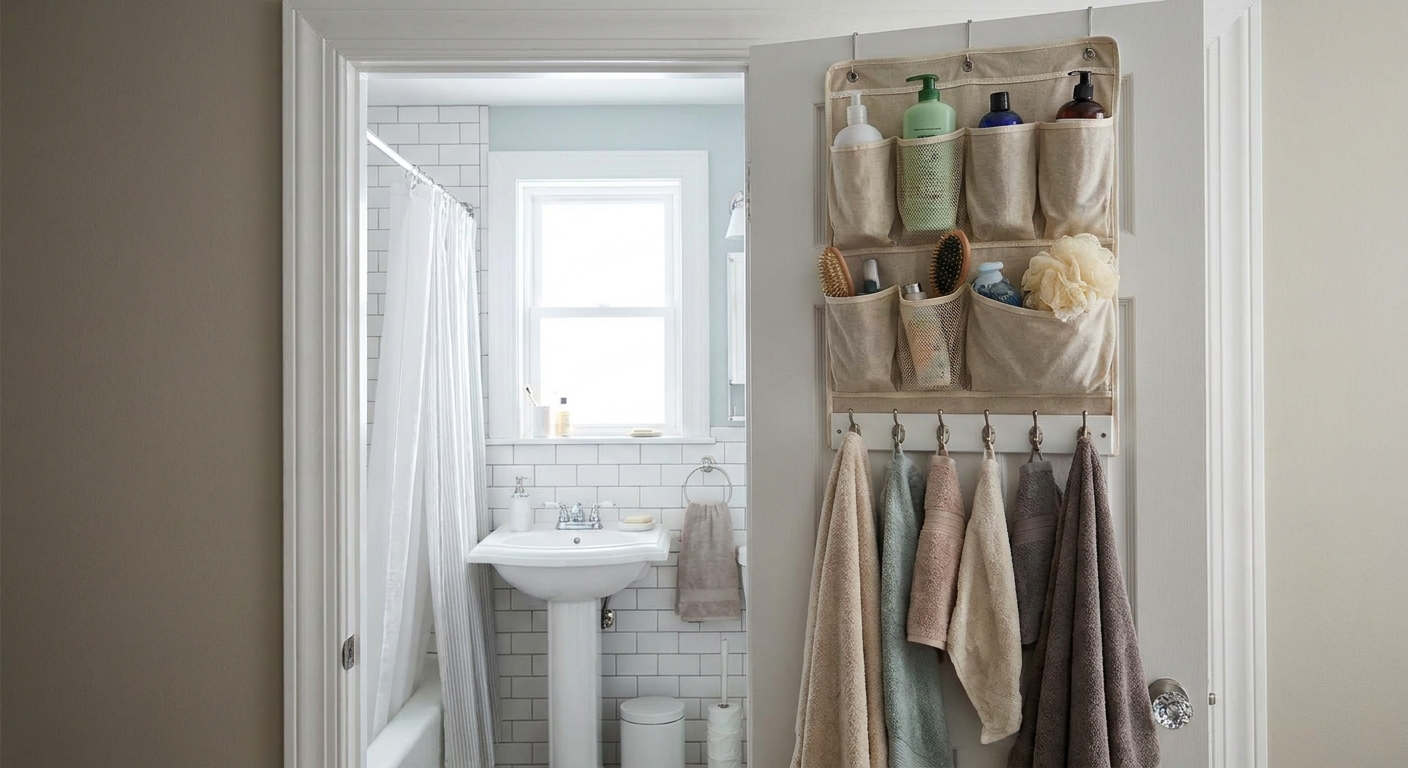
Before you hang anything, measure these three things
A little measuring up front prevents the classic tiny-bathroom problem: you install something that technically fits the door, but the door will not close, or it bangs into the toilet tank, or it scrapes the frame.
- Door thickness: Many over-the-door hooks and racks are designed for common interior door thicknesses (often around 1 3/8 in to 1 3/4 in), but it is product-dependent. Check the product specs, especially in older rentals where doors can be quirky. If the hooks feel tight, they can chip paint every time the door moves.
- Top clearance: Measure the gap between the top of the door and the frame. If it is small, choose slim hooks or add thin felt pads where the metal meets the door.
- Back-of-door “no hit zone”: Open the door to the position you use most (all the way open, or just past the toilet), then look at the swing path. I like to hold a piece of painter’s tape along the edge of the door and mark the spot where it would bump the toilet tank, vanity corner, or a wall-mounted towel bar. That line tells you how deep you can go before you create a daily collision.
My rule in tight baths: if the door opens inward, keep bulky storage higher and flatter. If the door opens out, you can go a bit deeper without creating a daily collision.
The easiest win: over-the-door hooks
Hooks are the fastest way to get towels, robes, and tomorrow’s outfit off the floor. They also look the most “built in” when you choose a style that matches your existing finishes.
What to hang on hooks
- Bath towel and hair towel (one hook per towel is best for drying)
- Robe
- Shower cap, loofah bag, exfoliating gloves
- A small hanging caddy for hair tools if you keep it light
How I keep hooks from damaging the door
- Add soft pads: Stick thin felt pads on the inside of the hook where it hugs the door. This reduces paint rubbing and that metal clack every time someone shuts the door.
- Keep weight realistic: Over-the-door hardware can be strong, but constant slamming plus heavy loads can slowly chew up the top edge of the door (and stress hinges). Use hooks for soft items, not gallon jugs of cleaner.
- Upgrade the sound: If your hooks rattle, a tiny strip of grippy shelf liner tucked behind the metal can quiet it down.
If towel drying is your main pain point, you might also like my ideas in Where to Hang Wet Towels in a Small Bathroom With No Wall Space.
Hidden hero: hanging pocket organizers
Pocket organizers turn the back of the door into a vertical medicine cabinet. They are perfect for tiny bathrooms because they store a lot without asking for floor space. The trick is choosing the right pocket style so it does not sag, swing, or turn into a clutter catcher.
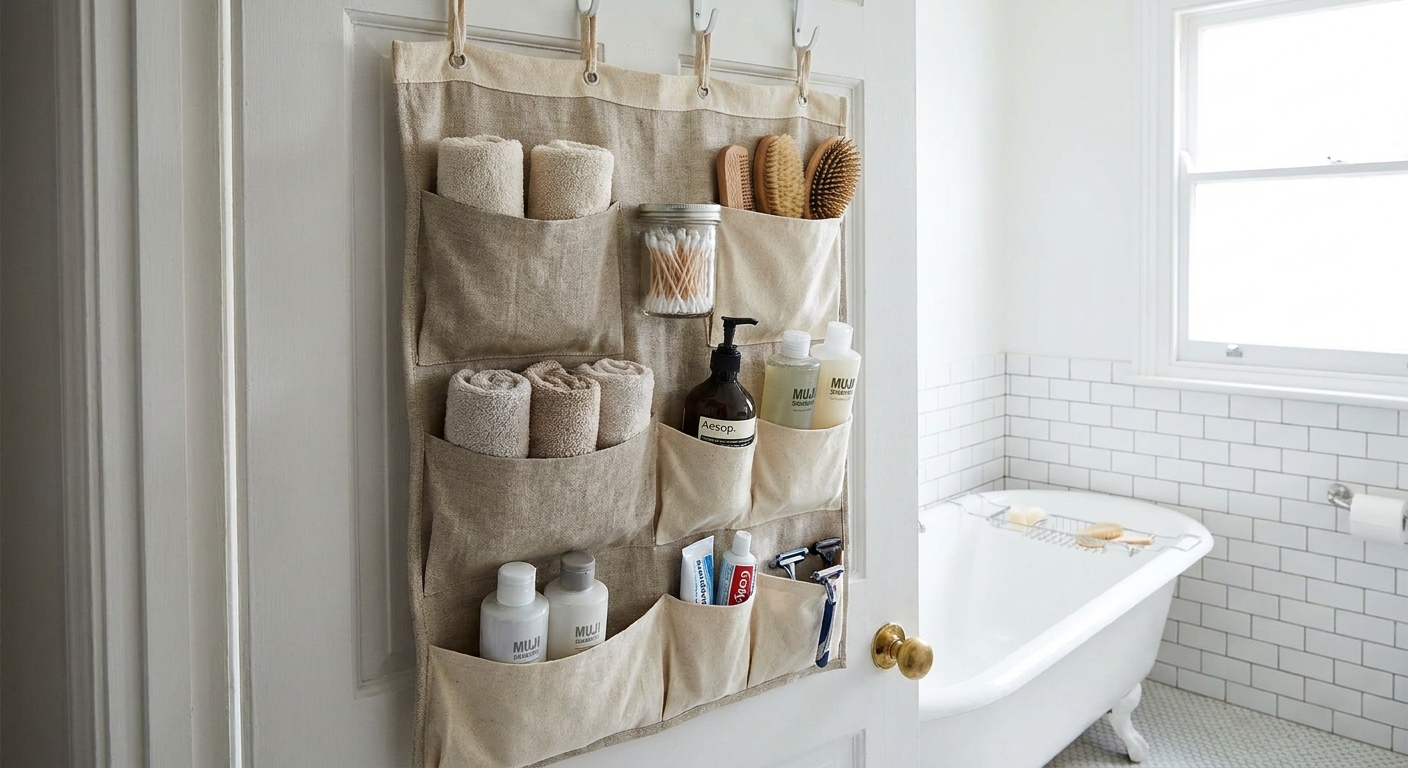
Best items for pocket organizers
- Skincare and hair product backups
- Travel-size toiletries
- Makeup and brushes (in a washable pocket)
- First aid basics and small meds (in child-safe homes, keep this out of reach)
- Razors and shaving cream
- Extra bars of soap, floss, cotton rounds
Choose the right organizer for bathrooms
- Fabric pockets: Quiet, lightweight, and less likely to scratch paint. Look for reinforced stitching at the top and pockets that hold shape. Bonus points if it is machine-washable.
- Clear pockets: Easier to find what you need, but some plastics can cloud, warp, or crack over time, especially with heat, age, and lots of sun (hello, bright bathroom window). Keep it away from heaters and hot tools.
- Flat profile: If your door opens inward and passes close to the toilet or vanity, pick an organizer that stays slim when filled.
My “no flop” install method
The main complaint with pocket organizers is swinging. Here is how to keep it stable without drilling:
- Hang it first, then load it: Let it settle so you can see where it naturally wants to sit.
- Anchor the bottom corners (carefully): Use removable, renter-friendly adhesive strips to tack the lower corners of the organizer to the door. A heads-up from someone who has donated paint to the adhesive gods: humidity and semi-gloss paint can make bonding unpredictable, and removal can lift paint if you rush it. Test a strip in an inconspicuous spot first, follow the weight limits, avoid freshly painted doors, and remove slowly. If you are nervous, put a small barrier of painter’s tape on the door first and stick the strip to the tape.
- Sort by frequency: Put daily items at chest height, backups and occasional items higher, and nothing heavy at the very bottom where it encourages sagging.
If your bathroom storage problem is bigger than the door, I also keep a running list of renter-safe ideas here: 7 Damage-Free Wall Storage Hacks for Rented Bathrooms.
Add a towel rack, even when you cannot drill
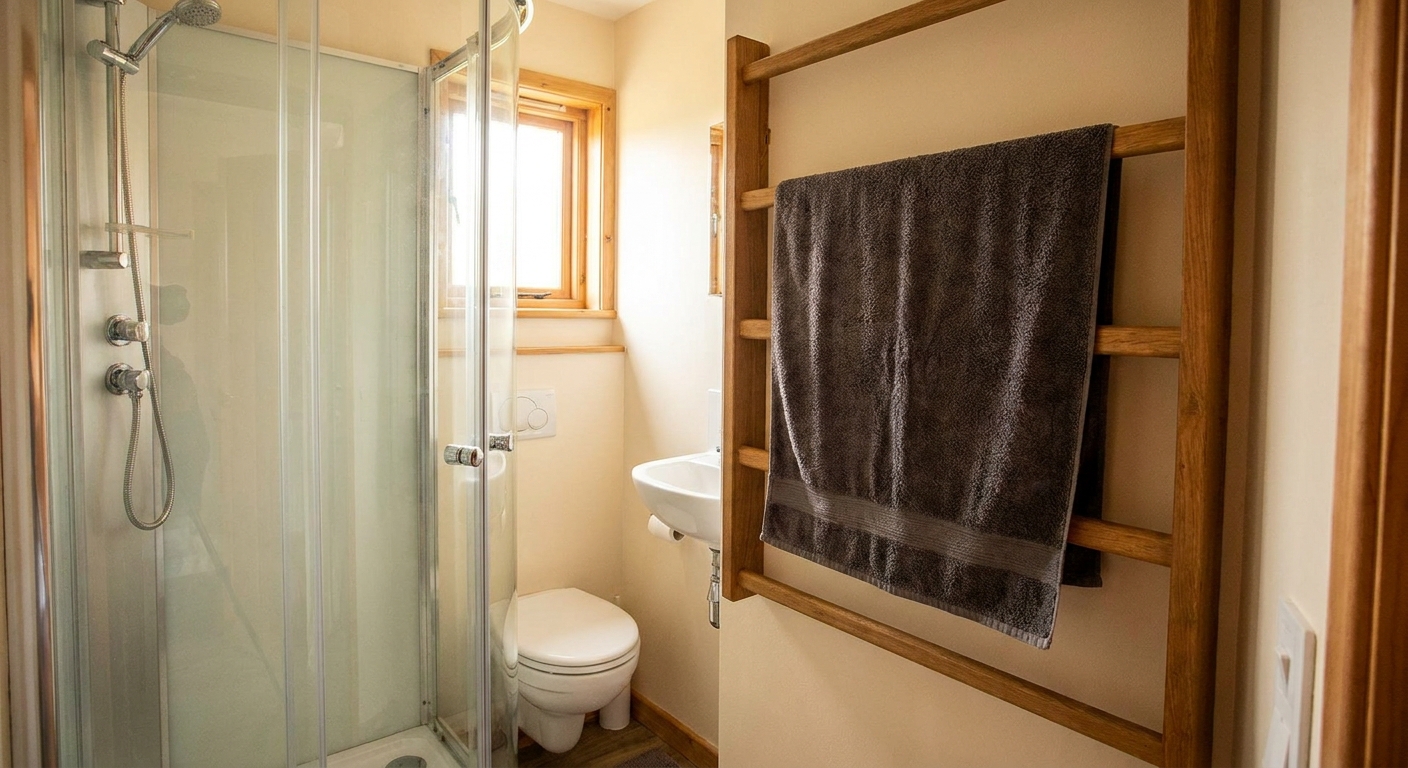
If your towel situation is one hook and a prayer, the back of the door can hold a towel bar style rack. This is especially helpful in older bathrooms where there is no good wall space near the shower.
Two types that work well on doors
- Over-the-door towel bars: Usually two or three horizontal bars. They can improve airflow compared with stacking towels on one hook, especially if you spread towels across separate bars.
- Ladder-style over-the-door racks: A bit more decorative, and nice if you want a spa look. Just keep in mind they can be deeper than a standard bar rack.
Placement tips for faster drying
- Leave breathing room: If towels are folded over a bar too tightly, they stay damp longer. Spread them out or use two bars.
- Avoid the steamiest zone: If the rack sits right next to the shower, everything stays humid. If you can, keep towels on the door and crack the door after showers.
- Do not block airflow: Pocket organizer plus towel bars can work together, but keep towels on one side and pockets on the other so nothing presses into damp fabric.
What to store on the door (and what I avoid)
The back of the door is strong, but it is also a moving surface. Anything too heavy, too breakable, or too leaky becomes a daily annoyance.
Yes, store these
- Towels, robes, hair wraps
- Lightweight toiletries and backups
- Hair accessories, brushes, styling tools (fully cooled down)
- Cleaning cloths, small refills
I avoid these on the door
- Glass bottles: Doors slam, things fall, tiles do not forgive.
- Open liquids: Oils and mouthwash are messy if they tip.
- Very heavy bulk items: Big detergent jugs, large packs of paper goods. Save those for under-sink or linen storage.
- Heat and flame hazards: No aerosols or flammables stored near heaters, vents, or hot tools. I also do not hang a curling iron or hair dryer until it is cool to the touch.
Need a better home for bulky bathroom basics? My go-to hiding spots are in How to Hide Toilet Paper and Plungers in a Small Bathroom.
Make it look intentional (not like a dorm door)
I love function, but I also want a bathroom to feel calm. These are my favorite small tweaks that make back-of-door storage feel polished.
- Match finishes: Choose hooks that coordinate with your faucet or mirror frame (black, chrome, brushed nickel, brass-tone).
- Use a single “category” per zone: Top third for towels, middle for daily toiletries, bottom for extras. It looks tidy because your brain can read it at a glance.
- Pick a neutral organizer: Fabric in white, oatmeal, or charcoal reads more like decor and less like utility.
- Decant tiny items: Small bins or pouches inside pockets keep the visual noise down.
- Choose washable materials: In a humid bathroom, I prefer fabric organizers I can launder occasionally, or at least wipe down, so they do not turn into a mystery-mildew science project.
If you are working with a sink that has zero storage, pair door storage with a smart sink strategy: Pedestal Sink Storage Ideas Renters Can Do.
Troubleshooting in tiny, older rentals
The door will not close
- Switch to slim-profile hooks.
- Move bulky storage lower or higher so it clears the frame.
- Add felt pads so the hardware sits more flush and does not catch.
The hooks are scraping paint
- Add thicker felt pads at the contact points.
- Clean the top edge of the door and hook, then rehang so grit is not grinding into the paint.
- If the fit is too tight, choose a hook made for thinner doors.
The organizer swings every time someone walks by
- Anchor the bottom corners with removable adhesive strips, but test first and remove slowly to avoid paint pull.
- Lighten the load and distribute weight evenly.
Everything feels damp
- Prioritize towel bars over single hooks so towels dry flatter.
- Crack the door after showers if possible.
- Do a quick weekly wipe-down of organizers and launder fabric ones periodically to prevent mildew in humid bathrooms.
The door feels heavy or sticks
- Reduce weight and spread items across multiple hooks instead of one overloaded rack.
- Give the hinge screws a quick check now and then. Tightening a loose screw can stop the slow sag that makes doors rub.
A simple back-of-door setup I recommend
If you want a quick plan that works in most small bathrooms, this is the combo I come back to again and again:
- Top: Two to four over-the-door hooks for towels and a robe.
- Middle: Slim pocket organizer for skincare, hair, and backups.
- Bottom: Keep clear for airflow and door clearance, or use one low pocket for light extras like cotton rounds.
It is hidden when the door is open, and it is a full storage wall when you need it. Exactly the kind of tiny-space magic I live for.
For more small-bathroom organizing ideas, browse Storage & Organization.