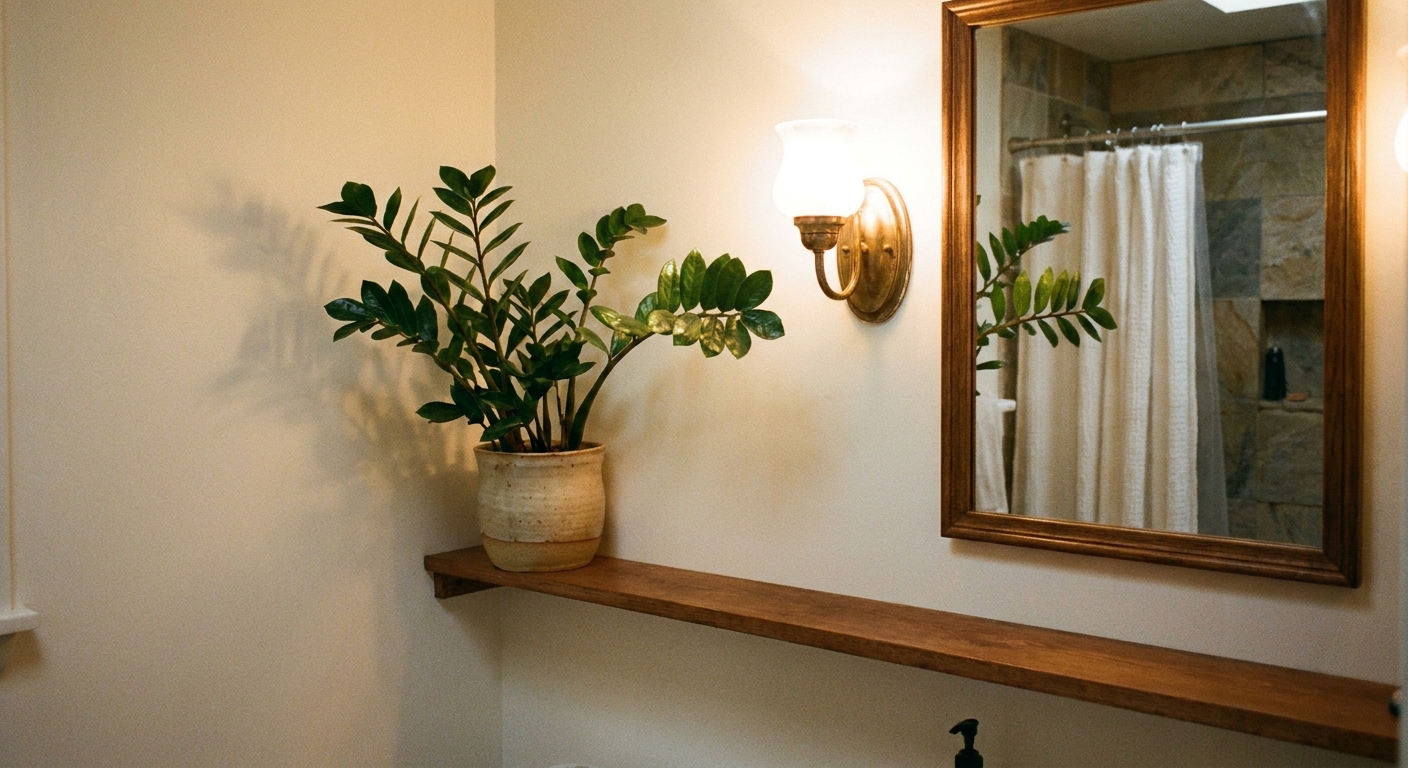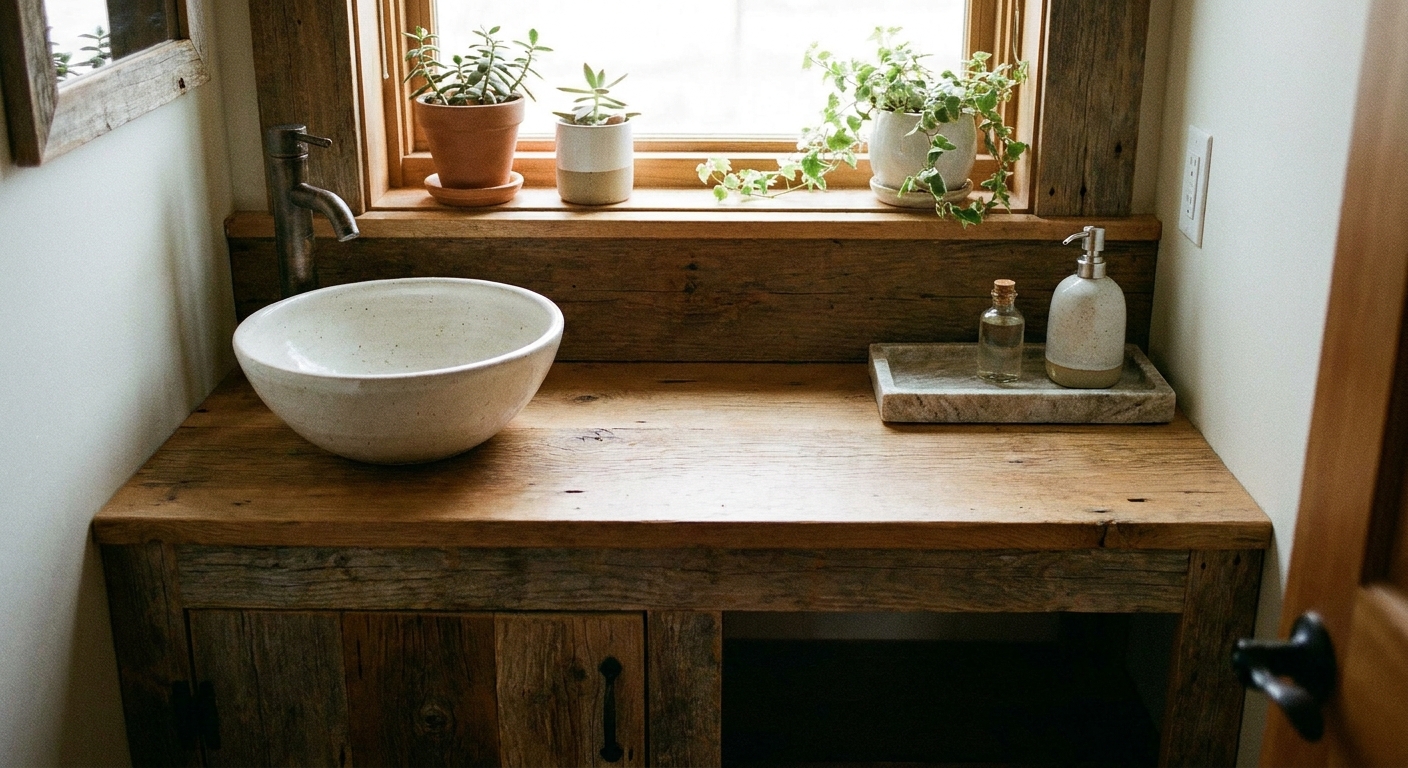

My first “closet bathroom” had exactly one mirror: a tired little rectangle glued above the sink. It did the job, but it did nothing for the room. The moment I added a second mirror in the right spot, the whole space shifted. It felt brighter, deeper, and less like I was getting ready inside a shoebox.
Strategic mirror placement is one of the most renter-friendly ways to visually enlarge a tiny bathroom because you are not changing the footprint. You are changing what your eye reads as the footprint.
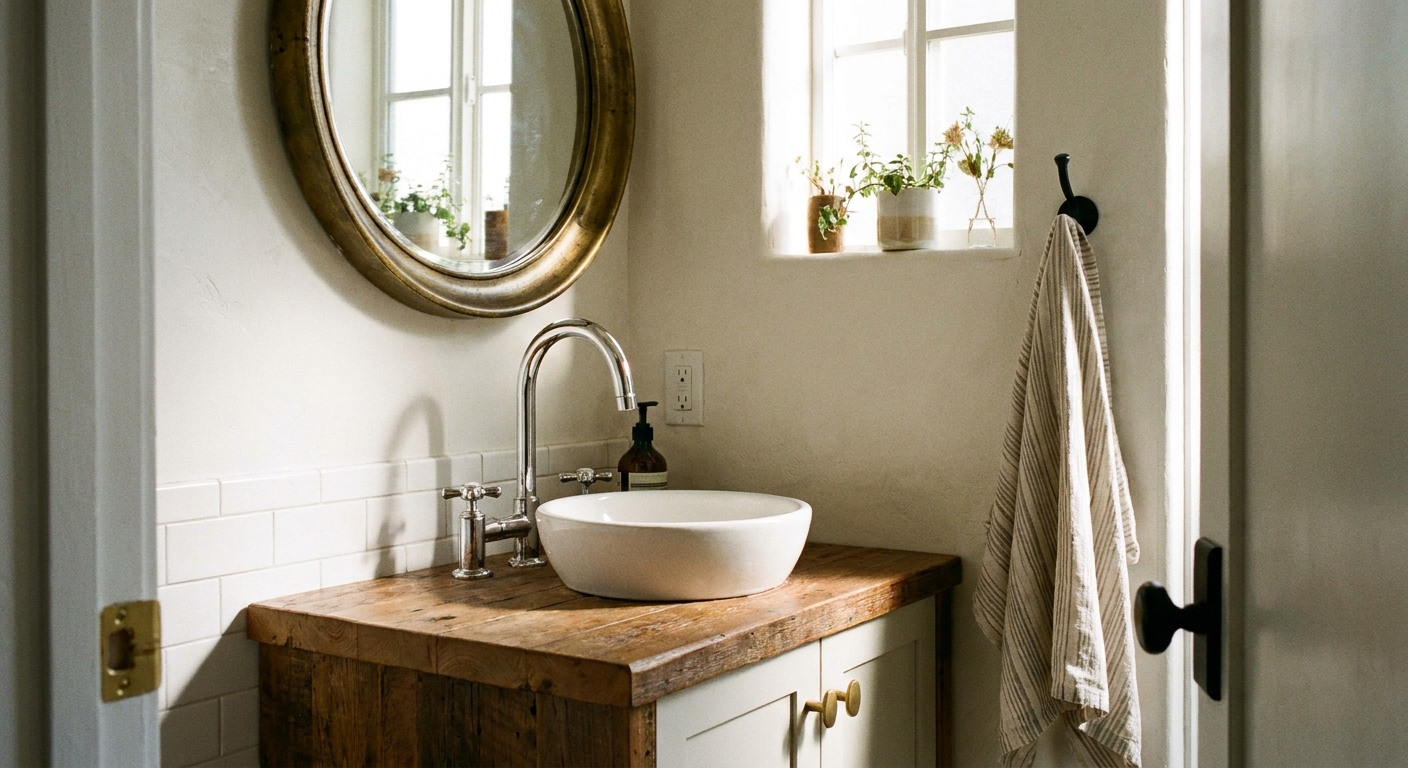
How mirrors make a bathroom feel bigger
Mirrors help in three main ways, and knowing which one you need makes placement so much easier.
- They bounce light: A mirror facing a window or light source pushes brightness deeper into the room.
- They create depth: A mirror reflecting an open doorway, a longer wall, or the shower area can “extend” your sightline.
- They reduce visual clutter: One larger, calmer reflection often reads cleaner than lots of small decor pieces competing for attention.
The goal is not “more mirrors everywhere.” The goal is one or two reflections that show something you want to see more of: light, length, or a clean focal point.
The best spots for an extra mirror
1) Opposite the window
If your bathroom has a window, the most impactful place for an accent mirror is often on the wall directly across from it. You are basically borrowing daylight and redistributing it.
- Works best: In dim bathrooms, rooms that get less direct sun, or spaces with one ceiling light.
- Shape tip: A vertical mirror makes the room feel taller. A wider mirror makes the room feel wider.
- Privacy note: If you are relying on the window for light but need privacy, pair this with budget-friendly window solutions so you can keep the glow without feeling exposed. I break down options in Bathroom Window Privacy on a Budget: Cling Film vs Tension Shades.
2) Next to the vanity
In many tiny bathrooms, you face the vanity and there is a narrow side wall right next to it. Placing a mirror on that side wall can create the feeling that the vanity area continues past its actual edge.
- Placement: Start with the mirror’s center roughly at eye level, then shift it slightly toward whatever you want to reflect, usually the brightest part of the room.
- Quick size guide: I like an accent mirror that is roughly two thirds to three quarters of the vanity mirror height, and narrow enough that it does not crowd outlets, towel rings, or the door trim.
- Styling trick: Keep what the mirror reflects simple: a clean shower curtain, a pretty towel, or open space.
3) Behind the bathroom door
If you have a blank back-of-door area, a full-length mirror can be functional and spaciousness-boosting, especially in bathrooms that do not have room for a linen cabinet.
- Best for: Getting dressed, checking outfits, and adding “another wall” visually.
- Renter-friendly mounting: Over-the-door hooks or mirror-specific over-the-door brackets are typically the safest bet for avoiding wall damage.
- Safety note: Make sure the mirror does not block the door swing or scrape, and keep it secure if you have kids or pets who might bump it.
- Bonus: The door itself can become a storage zone. See Hidden Storage on the Back of Your Bathroom Door for ideas that keep things tidy.
4) Across from the shower curtain
When you stand in the doorway and your eye hits the shower curtain quickly, the room can feel short. An accent mirror on the opposite wall helps the space read longer by reflecting the far end of the room and whatever light you have.
This works especially well if you upgrade your curtain styling so the reflection is pretty, not busy. If your curtain situation is tired, 7 Cheap Ways to Make Your Shower Curtain Look Expensive and Custom pairs perfectly with this trick.
5) Above the toilet
Above-the-toilet mirrors can work, but they are the easiest to get wrong because they often reflect clutter. If you do this, commit to a clean “scene” in the reflection.
- Do: Reflect a window, a simple art print, or a neat towel moment.
- Skip: Reflecting an open shelf stuffed with toiletries.
If your over-the-toilet area tends to become a landing pad, consider streamlining it first. Over-the-Toilet Storage That Won’t Look Cluttered can help you set up something that looks intentional in the mirror.
Mirror size, shape, and frame
Go bigger than you think
In small spaces, undersized mirrors look like afterthoughts. A medium-to-large mirror, even if it is thin, tends to feel more architectural and less like decor.
- Rule of thumb: For an accent mirror, aim for at least the visual presence of a small piece of art. If it looks like it belongs in a hallway powder room, it is probably too small.
Choose shapes by what you want to fix
- Arched mirrors: Soften boxy bathrooms and add height.
- Round mirrors: Great for breaking up a room full of rectangles, like tile, vanity, and door.
- Tall rectangles: Best for making ceilings feel higher and corners feel less tight.
- Wide rectangles: Best for widening a narrow wall or stretching a short sightline.
Frames that help
In a tiny bathroom, a heavy ornate frame can visually shrink the reflection area. If you want maximum spaciousness, try:
- Thin metal frames (warm brass, black, or stainless tones)
- Frameless edges for the cleanest look
- Light wood if you need warmth without weight
If you are mixing finishes in a small bathroom, it is totally doable, but keep it deliberate. My go-to approach is in Mixing Metal Finishes in a Small Bathroom.
What to reflect and what to avoid
This is the part most people skip. A mirror does not just add light. It doubles whatever it sees.
Reflect these
- A window or the brightest wall in the room
- A clean shower curtain with simple folds
- An open doorway or a longer sightline
- A plant (real or faux) placed where it will not get splashed
- A single pretty towel or robe on a hook
Avoid reflecting these
- The toilet straight-on (it is just not the vibe most of us want doubled)
- Open storage stuffed with products
- The side of a crowded countertop
- A hamper, trash can, or cleaning tools
- A harsh bare bulb (it will glare)
If your countertop is always visually noisy, fix that first and the mirror instantly looks like a design choice, not a magnifying glass for clutter. Style a Tiny Vanity Countertop Without Losing Work Space is my reset routine.
Renter-friendly ways to add mirrors
I love a dramatic mirror moment as much as anyone, but I love my security deposit more. Here are low-commitment options that still look polished.
Lean it
If you have even a sliver of floor space, a leaning mirror can be a great option, especially behind a door or in a corner near the vanity. Add a small non-slip pad under the bottom edge if the floor is slick, and do a quick stability check so it cannot slide forward if it gets bumped. If you have kids or pets, choose a spot where it is not in the traffic path.
If you can, add an anti-tip strap or bracket where your lease allows it, or at least a small corner bumper so a nudge does not turn into a glass-on-tile situation.
Over-the-door hardware
For full-length mirrors, over-the-door mounting is usually the cleanest renter move. Just check that the door still closes easily and does not scrape.
Damage-free hanging strips
Some lightweight mirrors can work with heavy-duty hanging strips, but humidity and weight matter. Many manufacturers have specific weight limits and surface rules, and some do not recommend use on certain paint finishes or in constantly steamy zones. If you go this route, follow the package directions exactly, including wall prep and cure time, and avoid placing the mirror where it will get regular shower spray.
Also check the back of the mirror and your wall surface for compatibility. Strips often struggle on textured walls, on seams and edges, and on areas that regularly condense moisture.
Tile drilling
Drilling into tile is a commitment. If you are renting, I generally treat tile like a no unless you have written permission and a plan for repair. A leaning mirror or door-mounted option often gets you most of the impact with much less stress.
Steam and fog
If your bathroom turns into a steam room, place the extra mirror a little farther from the shower line if you can. Less direct moisture means less fogging and less wipe-down frustration, especially for frameless styles. If you love the look across from the shower, plan on quicker cleanups and keep a small microfiber cloth tucked in the vanity for fast touch-ups.
Placement plans for small layouts
Long and narrow bathroom
- Best move: Add a mirror on one long wall to reflect the opposite wall and visually widen the corridor effect.
- Avoid: A tiny mirror at the end that just creates a bright dot instead of a “second wall.”
Corner vanity
- Best move: Place a slim vertical mirror on the adjacent wall to create perceived width around the sink zone.
- Extra credit: Add a warm bulb so the mirror reflects flattering, soft light instead of shadows. If your lighting is dated, Renter-Friendly Bathroom Lighting has options that do not require rewiring.
Pedestal sink and no storage
- Best move: Use a mirror that includes a shallow shelf or pair a simple accent mirror with a small wall hook zone for towels.
- Also helpful: Pedestal Sink Storage Ideas Renters Can Do so what the mirror reflects stays calm.
Quick mirror checklist
- Stand where you enter the bathroom. What do you want to see reflected first?
- Turn on the lights and open the door. Identify the brightest spot and aim a mirror toward it.
- Tape a paper template to the wall. Use painter’s tape to test size and height for 24 hours.
- Check glare. If the mirror reflects a bare bulb, shift it a few inches or choose a different wall.
- Declutter the reflection. Whatever the mirror sees will look twice as “present.”
FAQ
Is it weird to have multiple mirrors in a small bathroom?
Not if each mirror has a job. One can be functional (vanity) and the other can be strategic (light and depth). The key is avoiding a funhouse effect where mirrors face each other or multiply clutter.
Should I put a mirror across from another mirror?
I skip it in tiny bathrooms. Facing mirrors can create busy reflections and can feel visually jittery in a small space. I prefer one strategic reflection per sightline.
What is the biggest mirror mistake in small bathrooms?
Hanging a mirror where it reflects the mess. If your mirror is doubling toiletries, cords, or a crowded shelf, it is working against you even if it is a beautiful mirror.
The mirror rule I swear by
If you are only adding one extra mirror, place it where it reflects the brightest, calmest part of the room. Light plus simplicity is what reads spacious. Everything else is just shiny clutter.
If you want another easy way to make a small bathroom feel more luxurious once the mirrors are working, I keep a running list in 9 Easy Styling Tweaks for a Spa-Like Small Bathroom.