
The first bathroom I ever “adulted” in had a window that looked directly onto the neighbor’s back steps. It was bright, which I loved. It was also… incredibly personal. I wanted privacy without giving up daylight, and I definitely was not about to drill into 70-year-old tile and risk my deposit.
If you are choosing between static cling privacy film and tension-fit shades, here is the real-world comparison I wish I had when I was standing in the aisle trying to decide which one would hold up to shower steam.
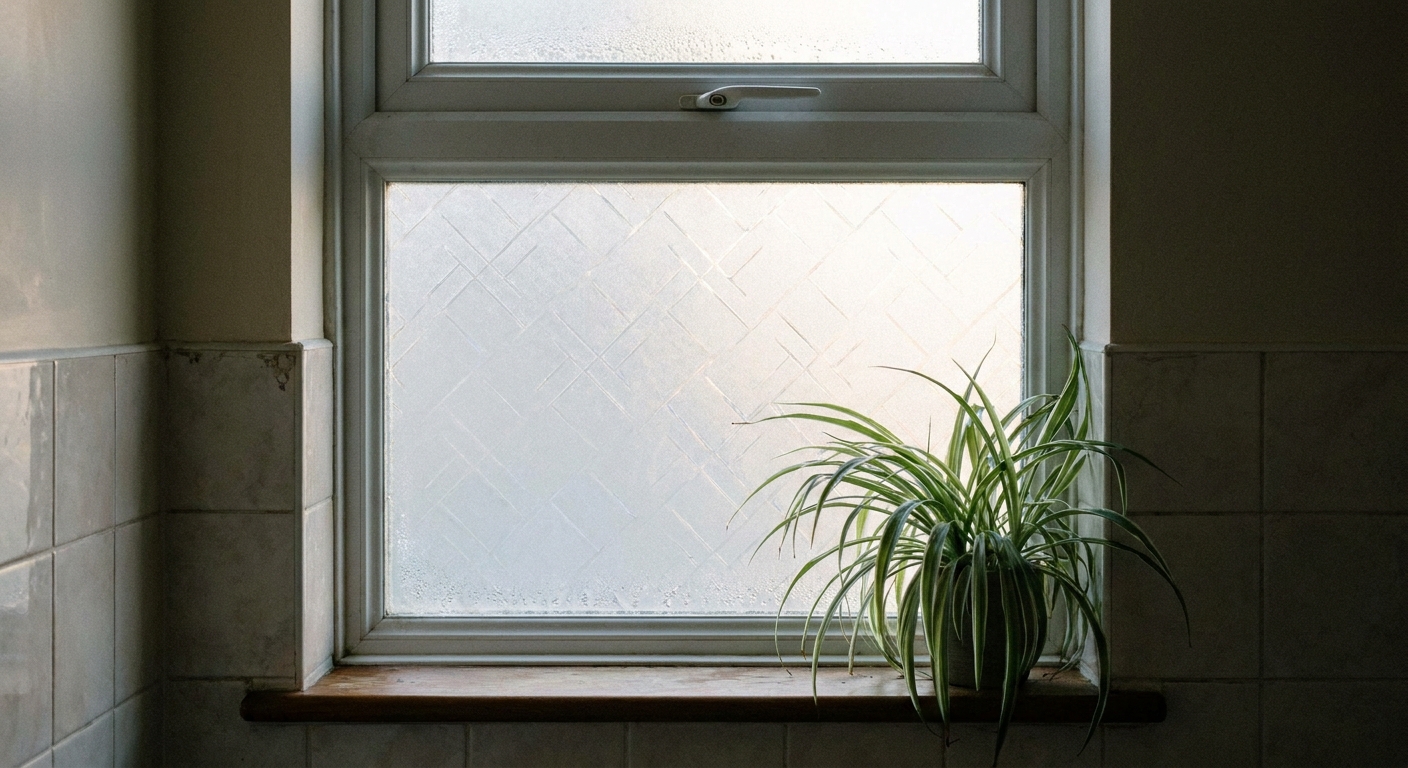
Quick verdict: which one to pick
- Pick static cling film if you want maximum light, a clean minimal look, and an option that is unlikely to sag the way fabric can in humidity.
- Pick a tension-fit shade if you need privacy at night with the light on, you want something adjustable, or the window is textured and film will not stick well.
- Best of both worlds in many rentals: film on the lower portion of the glass (daytime privacy) plus a simple tension-fit shade for nighttime.
For more renter-safe privacy tweaks beyond the window, I keep a running list on the Privacy page.
Static cling film: bright and low fuss
Static cling film is the peel-on (and peel-off) sheet that sticks to glass using water and static, not glue in the traditional sense. That is why renters love it. Done right, it looks surprisingly polished, especially in tiny bathrooms where you want the window to disappear visually.
Why it works in small bathrooms
- It keeps the room feeling bigger. You still get a big rectangle of daylight, not a heavy fabric block.
- It plays nicely with humidity. Steam usually will not make it droop like a fabric shade can (though edges can lift if it was not fully smoothed down, or if hard-water residue builds up).
- It is easy to clean. A gentle wipe is usually enough, which matters when the window is near the shower.
Where cling film can disappoint
- Nighttime privacy is not always perfect. Many frosted and patterned films obscure details, but silhouettes can still show when it is dark outside and your bathroom light is on.
- Textured or pebbled glass is tricky. If your window is not smooth, film may not adhere well.
- It is not great if you need open and close control. Film is more of a set-it-and-forget-it solution.
- Some patterns look busier than you expect. The prism, rainbow, and heavily patterned styles can be fun, but they can also read cluttery in a tiny bath.
My no-drama install steps
- Clean the glass like you mean it. Any residue creates bubbles. Use glass cleaner, then wipe dry.
- Measure the glass pane (not the trim). Cut the film slightly oversized, then trim after it is placed.
- Spray the window with water. A few drops of dish soap in a spray bottle helps the film slide into position, but keep it light. Too much soap can make cling weaker at the edges.
- Apply and smooth from center outward. Use a credit card wrapped in a soft cloth or a squeegee.
- Trim the edges with a sharp utility blade for that custom look. Go slow, keep the blade as flat as you can, and aim the cut away from painted trim so you do not scratch anything.
Film styles that look intentional
- Frosted or etched look: the most timeless, least busy.
- Reeded or fluted pattern: gives vintage charm without reading “college apartment.”
- Stained-glass style: pretty, but make sure it fits your palette so it does not fight your decor.
Tension-fit shades: adjustable privacy
Tension-fit shades use a spring rod or tension mechanism to press-fit inside the window frame. The big win is control. You can drop it for full coverage at night and raise it for full daylight.
What counts as tension-fit (so you buy the right thing)
- Spring-tension roller shades that wedge inside the frame.
- Tension rod cafe curtains if you want fabric privacy without brackets.
- Inside-mount tension mini blinds made to press-fit (not the versions that still need screws).
Quick warning: many “temporary shades” are actually adhesive-mounted pleated paper. Those can be useful, but they are a different category than true tension-fit options.
Why renters love them
- No drilling. You are using pressure, not screws.
- Better nighttime privacy. A light-filtering or room-darkening shade blocks silhouettes more effectively than most films.
- Instant finished look. Especially if your window trim is old or mismatched.
Where they can get annoying in bathrooms
- Humidity can cause drooping or warping if the material is paper-like or not moisture resistant.
- Mildew risk if fabric stays damp in a poorly ventilated bath. Running the fan during and after showers helps more than you would think.
- They collect dust. In tiny bathrooms, everything is close to hairspray and powder. Shades need occasional wiping.
What to look for so it survives shower steam
- Moisture-resistant materials: vinyl, coated polyester, or faux-wood style slats made for humid rooms.
- Rust-resistant hardware: if any metal is exposed, humidity will test it.
- True inside-mount fit: measure the inside frame width at top, middle, and bottom. Old houses are rarely square.
- Enough inside depth: some products labeled “inside mount” still need a bit of clearance, or sneak in small brackets. If you want truly no-hardware, confirm it is pressure-fit from the start.
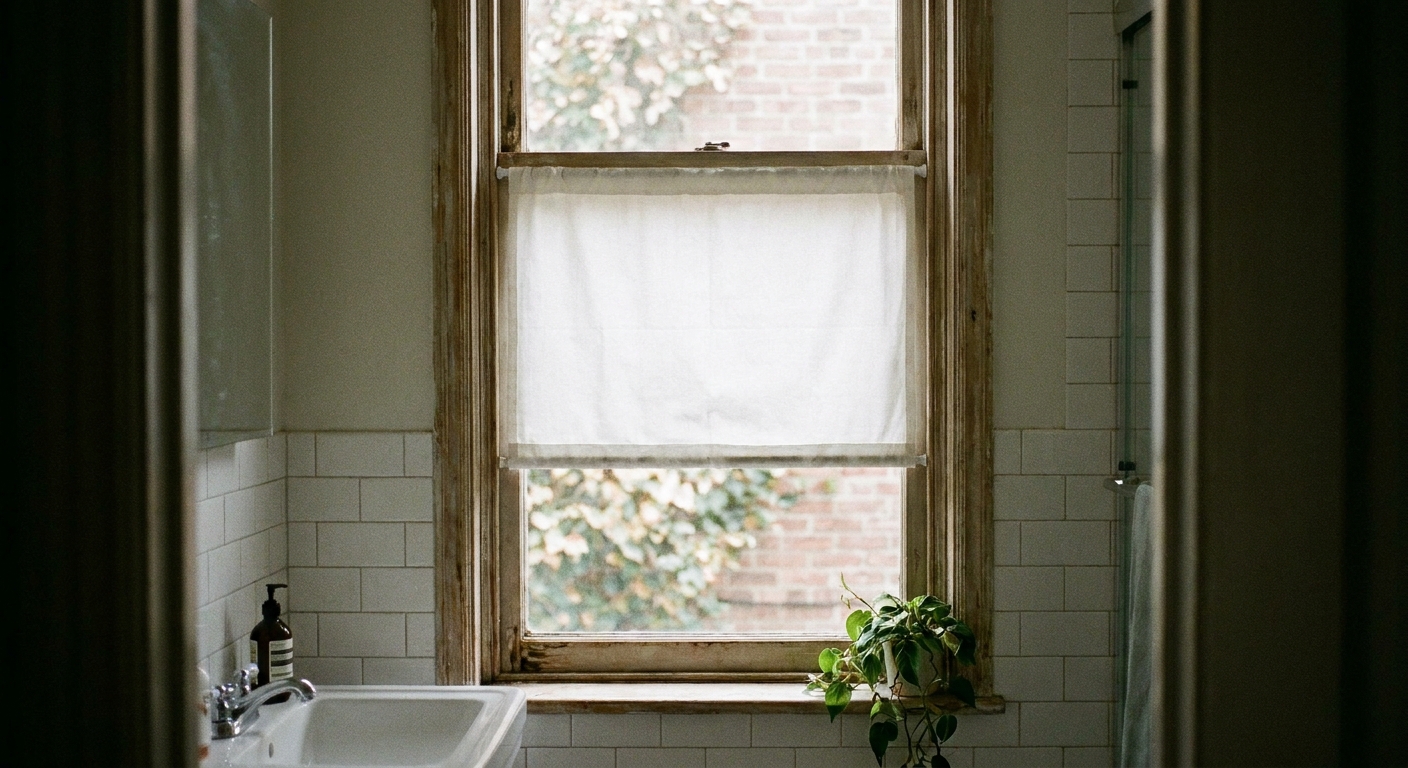
My go-to setup for tiny windows
If your window sits near the shower, choose a light-filtering, moisture-resistant shade and set it as high inside the frame as possible so it is less likely to get splashed. If you need airflow, keep it slightly raised and pair with film on the lower half of the glass.
Cling film vs tension shades
| Factor | Static cling film | Tension-fit shades |
|---|---|---|
| Privacy during the day | Excellent for most bathrooms | Excellent |
| Privacy at night with lights on | Varies, silhouettes may show | Usually better |
| Natural light | High, especially frosted | Medium to high depending on material |
| Humidity and steam | Very good (if edges are fully smoothed) | Depends on material, choose moisture resistant |
| Ease of cleaning | Wipe glass as usual | Needs dusting and occasional wiping |
| Best for tiny bathrooms | Yes, keeps it airy | Yes, adds softness but can feel bulkier |
| Removal when you move | Usually peels off cleanly | Lift out, no marks if fitted gently |
Common window scenarios
If your window faces a walkway
Go with frosted cling film for daytime plus a simple tension-fit shade for nighttime. This is the combo that feels the most normal and gives you options.
If your bathroom is already dark
Choose a light-maximizing frosted film first. If you still need nighttime privacy, add a sheer or light-filtering tension-fit shade, not room darkening.
If the glass is textured
Skip cling film and do a tension-fit shade. If you want extra diffusion, consider a liner-style light-filtering shade that keeps the window from looking heavy.
If the window is inside the shower area
Cling film usually wins because it tolerates splash and steam better than most fabric options. If you need a shade too, pick something explicitly moisture resistant and keep it out of the direct spray line.
Make it look more expensive
- Trim matters. Wipe and brighten the window frame before installing anything. Clean trim makes budget fixes look custom.
- Match whites. If your tub is warm white and your shade is optic white, it can look accidental. Aim for the same undertone.
- Add softness elsewhere. If you go with minimalist film (my favorite), bring in warmth with towels and a small bath mat so the window does not feel stark.
- Use other drill-free upgrades strategically. If you are already refreshing the room, pair window privacy with renter-safe wall solutions. I like these damage-free wall storage ideas and plug-in lighting options to make the space feel intentional.
FAQ
Will static cling film leave residue?
On smooth glass, most static cling films remove cleanly because they are not adhesive-based. If it has been up for years or baked by sun, you might need to re-wet it to release. If it resists, warm the film slightly with a hair dryer and peel slowly, then wipe the glass clean.
Can I put cling film on frosted glass?
If the glass is already frosted but still smooth, it may work. If it is textured, pebbled, or heavily etched, it is less reliable. In that case, a tension-fit shade is the safer bet.
What is best for nighttime privacy?
A tension-fit shade in a light-filtering or room-darkening material generally gives better nighttime privacy than film alone. Film can still show vague shapes when your bathroom light is on.
How do I prevent a tension-fit shade from slipping?
Make sure you are fitting it inside the frame at the narrowest measurement, and clean the frame where the ends press in. In old rentals with glossy paint, a tiny square of non-slip shelf liner at the contact points can help, as long as it does not mark the paint.
My budget pick
If you are deciding purely on budget and tiny-bathroom impact, I would start with a simple frosted static cling film. It is the fastest way to get privacy while keeping your bathroom bright and visually open. Then live with it for a week. If you notice nighttime silhouettes or you crave adjustability, add a moisture-resistant tension-fit shade as phase two.
That exact two-step approach is how I have handled more than one awkward rental window, and it is still my favorite way to get privacy without making a small bathroom feel even smaller.