
The first apartment bathroom I ever tried to “decorate” was basically a hallway with a toilet at the end of it. I bought the cutest little bath mat, plopped it in front of the sink, and somehow the room looked even skinnier. That was my first lesson: in a small bathroom, rugs are not just cozy. They are visual architecture.
The right rug size and placement can stretch your floor plan, calm down a busy tile pattern, and make the room feel intentional instead of cramped. Here is how I choose and place rugs in tiny bathrooms so they look bigger, not more crowded.
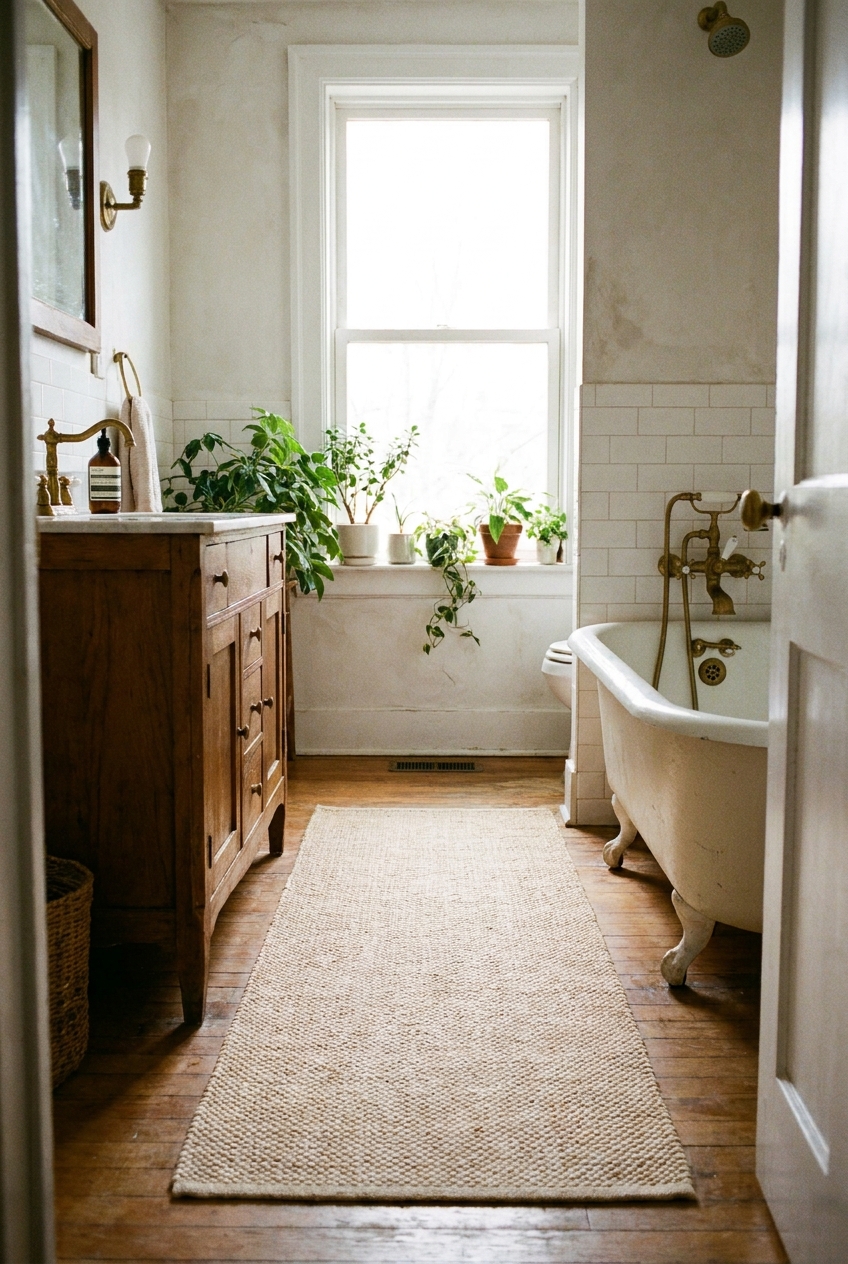
Start with one goal
Small rooms feel smaller when the eye keeps stopping. Grout lines, cabinet toe kicks, dark bath mats, and multiple little rugs can chop up the floor into pieces. Your rug plan should do the opposite: create longer lines and quieter shapes.
- One longer rug often reads bigger than two or three small mats.
- Lighter values (not necessarily white, just not super dark) tend to open up the floor.
- Simple patterns usually look calmer than high contrast, tiny busy prints.
Get the size right
If you remember one thing: in small bathrooms, the rug is often too small. A tiny mat floating in the middle of the floor highlights how little floor you have.
Quick sizing rules I use
- Leave a border. Aim for about 2 to 4 inches of bare floor between the rug edge and the walls or cabinets. This keeps the rug from looking jammed in.
- Cover the walkway, not the corners. You want your feet landing on it where you naturally stand and walk, not tucked under the vanity like a postage stamp.
- Go longer before wider. In narrow bathrooms, length tends to expand the room visually more than width.
Common layouts and what often fits
- Galley bathroom (sink on one side, tub on the other): A runner that fills most of the open strip down the center. Common sizes to try: 2' x 6' or 2' x 7' (and in ultra-narrow spaces, a 20" x 60" runner can still do a lot).
- Sink and toilet with open floor in front: A medium rectangle that reaches toward the toilet zone so the floor reads like one area. I often start with something around 24" x 36" or 2' x 4' and adjust from there.
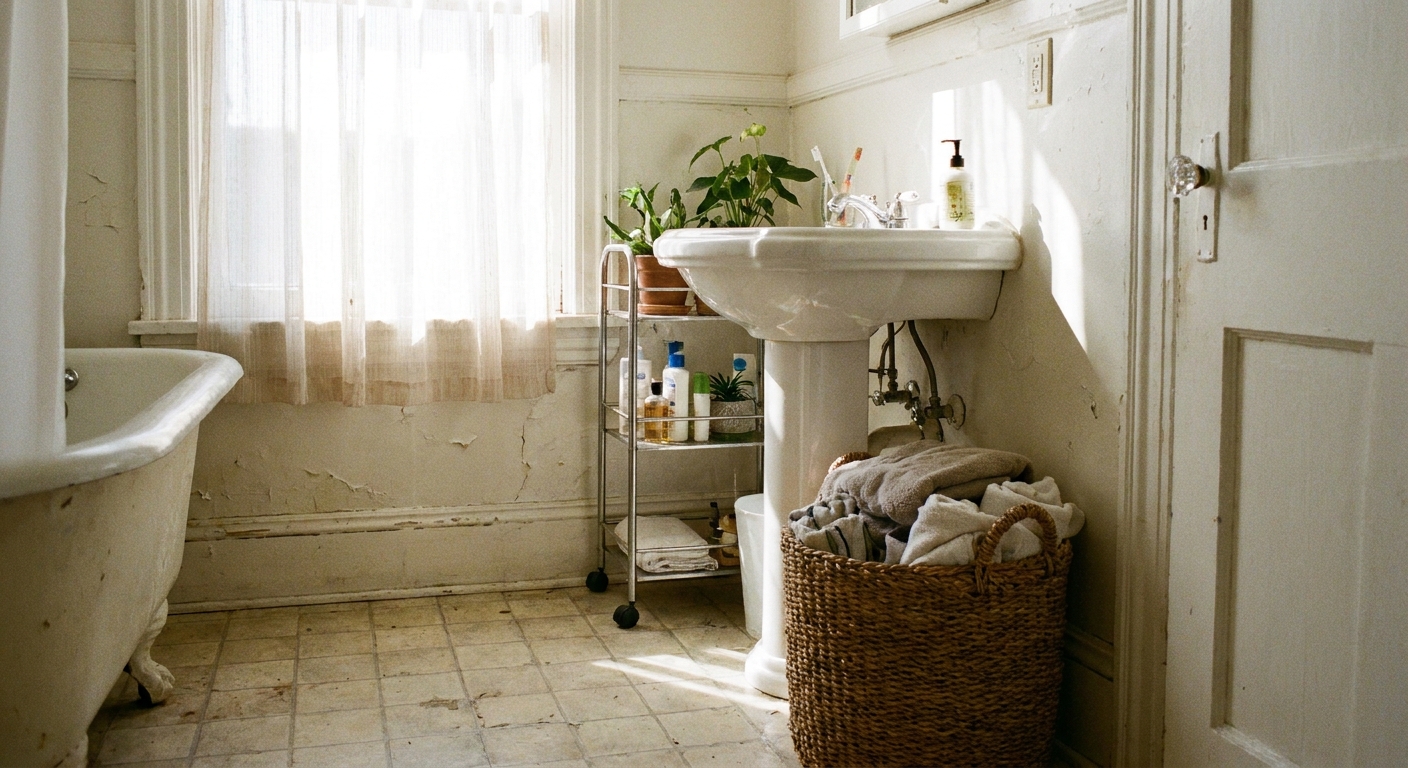
- Pedestal sink bathroom: A larger rug is often possible because there is no bulky vanity base. If you need storage ideas to keep it from feeling cluttered, see pedestal sink storage ideas renters can do.
My tape test: Before buying anything, I use painter’s tape to outline the rug size on the floor. If it looks shockingly big at first, it is often the right direction for making the room feel more open.
Pick a helpful shape
Shape is surprisingly powerful in a tiny bath. You are basically drawing lines for the eye to follow.
Runner rugs
If your bathroom is narrow, a runner can create an instant “longer” feeling. Center it in the walkway and keep both long edges parallel to the walls. That strong line helps the room read like it has more depth.
Rectangles
A rectangle rug makes the floor feel more grounded. It is my go-to when the room already has a lot going on visually (patterned tile, a busy shower curtain, or open shelving).
Round rugs
Round rugs can be adorable in small bathrooms, but they can also emphasize “small” if they are tiny. I like a round rug when:
- the bathroom has lots of hard angles (square vanity, boxy mirror) and needs softness
- you have a pedestal sink and a little more visible floor
- the round rug is large enough to feel intentional
Toilet contour mats
I know they are sold as “bathroom sets,” but the contour mat around the toilet often makes the room feel more chopped up. If you want softness underfoot near the toilet, you will usually get a more continuous look by extending one main rug toward that area instead.
Place it for space and safety
Where you put the rug is just as important as what you buy. The goal is to create one calm runway or one calm island, not lots of little landing pads. Also, bathrooms get wet, so prioritize non-slip backing or a non-slip pad and keep edges out of door swings.
1) Center it on the walkway
In most small bathrooms, there is one path you walk every day: door to sink, sink to toilet, toilet to shower. Center the rug on that path, even if it means it is not perfectly centered under the vanity.
2) Start it closer to the door
This is a trick I use constantly in tiny spaces: if the rug begins closer to the doorway, your eye reads the floor as longer the second you step in. Just leave enough clearance so the door swings freely.
3) Tuck the front edge a little (sometimes)
If you have a floating vanity or even a standard vanity with a bit of toe-kick space, tucking the rug edge under by an inch or two can look custom and more expansive. Do not push it so far under that it bunches or catches when you step back.
4) Keep it parallel
Angled rugs are great in big rooms. In a small bathroom, an angle often reads as visual noise. Align the rug with the longest wall to help visually stretch the footprint.
5) If you need two rugs, make them act like one
Sometimes you need a bath mat at the tub plus something at the sink. If that is your reality, you can still make it feel bigger:
- choose the same color family and texture
- avoid two different patterns
- keep them aligned along the same axis (both straight, not skewed)
Color and pattern
Think of your rug like paint for the floor. It can either amplify contrast or smooth everything out.
Colors that feel bigger
- Soft neutrals: ivory, oatmeal, warm gray, greige
- Muted tones: sage, dusty blue, clay, pale terracotta
- Low contrast patterns: tone-on-tone stripes, subtle diamonds, small scale texture
When dark rugs work
You can absolutely do a dark rug in a small bathroom, but it helps to make it look deliberate. Dark rugs tend to look best when they tie into at least one other element (dark frame mirror, black faucet, dark towel). If the rug is the only dark thing, it can read like a hole in the floor.
Stripes
- Lengthwise stripes help a narrow bathroom feel longer.
- Widthwise stripes can make a narrow room feel wider, but they can also shorten it visually. Use this if the bathroom feels like a tunnel.
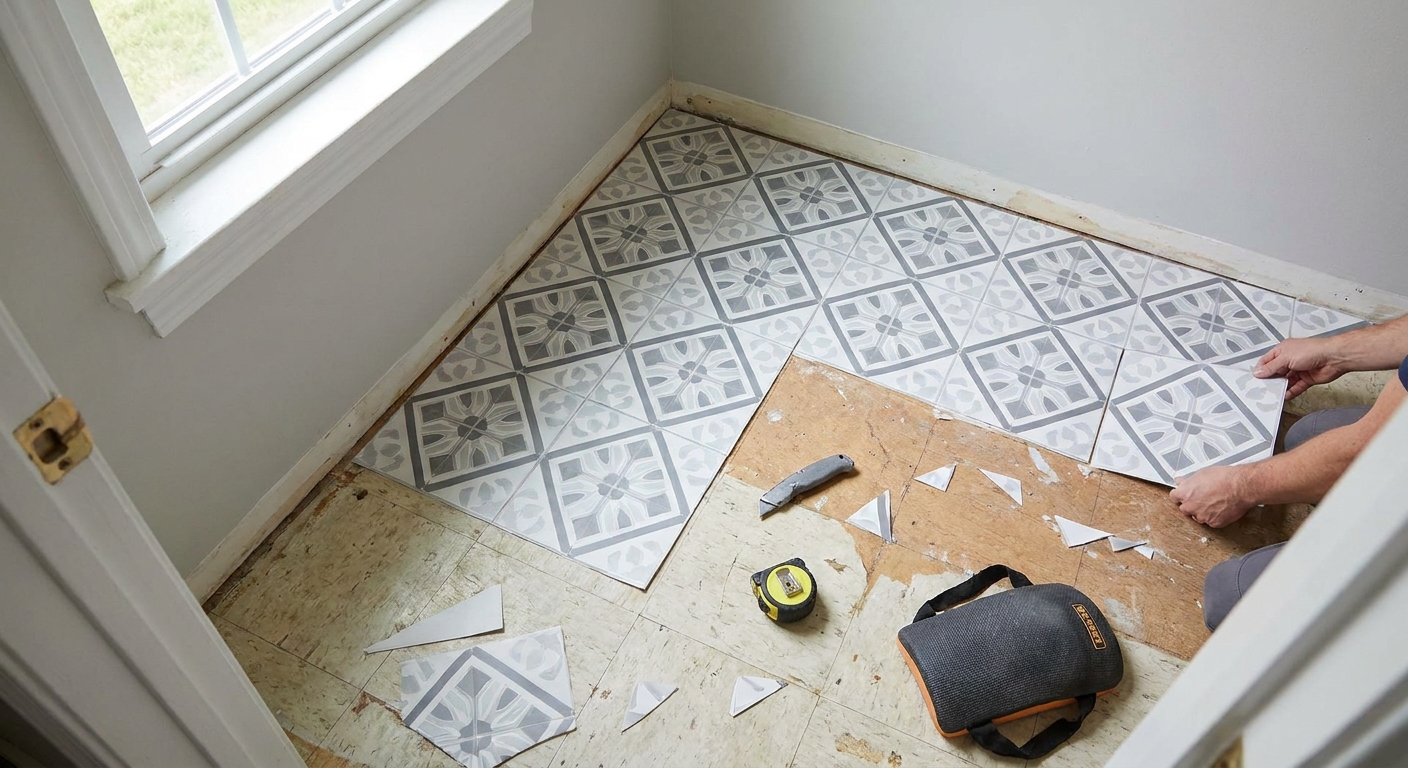
If your bathroom has busy flooring you cannot change, a quiet rug is your best friend. If you are covering ugly floors, pairing a larger rug with a renter-friendly floor fix can make a massive difference. See how to cover ugly bathroom floors with peel-and-stick tile.
Texture, pile, and fiber
In small bathrooms, texture shows up fast. The best rug is the one that dries well, does not curl, and does not make the room feel heavy.
- Low pile: easier to vacuum, less likely to catch the door, less likely to look rumpled in a tight space.
- Flatweave: tailored-looking and less bulky. It often dries faster than thick tufted rugs, especially in cotton or quick-dry synthetics.
- Microfiber and memory-foam styles: very comfy, very absorbent, and sometimes slower to dry. If your bathroom stays humid, look for a thinner profile and wash it more often.
Do not skip the rug pad, but choose wisely
A rug pad can help the rug lay flatter and stay put, which makes it look more custom and helps prevent slips. In bathrooms, I look for a non-staining, moisture-resistant pad, and I lift the rug occasionally to let the floor and pad air out. Some pads can trap moisture against certain floor types, so that little “air it out” routine matters.
Awkward bathroom problems
Swing-in doors
If the door hits the rug, you have three options:
- go with a thinner flatweave
- pull the rug back slightly from the door arc
- use a shorter rug that still feels intentional, not tiny
Glass shower doors and weird shower edges
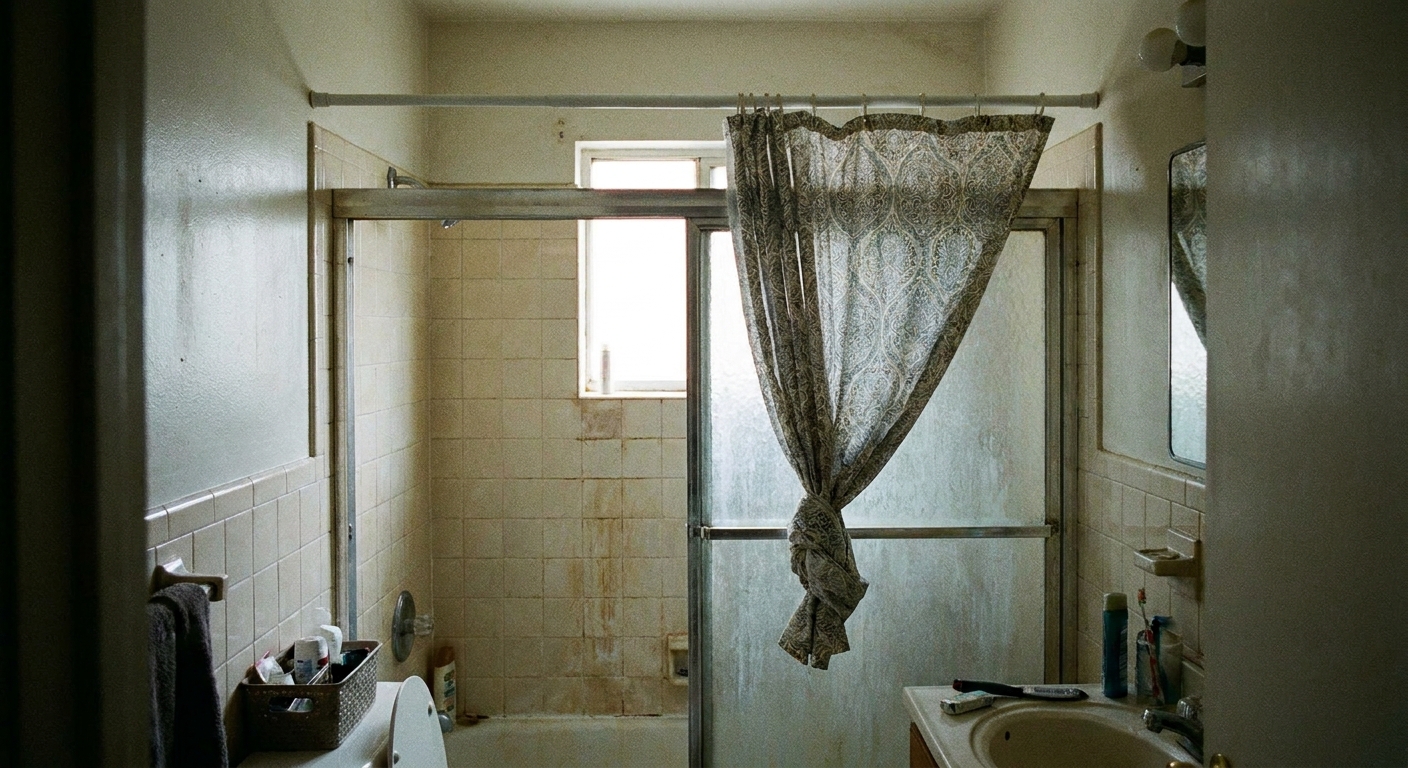
If your shower door swings out, keep rugs outside that swing path. If the glass makes the room feel choppy, softening the view with a shower curtain can help. I have done this in rentals and it is surprisingly effective. See how to hide an outdated glass shower door with a tension rod and curtain.
Almost no floor showing
If you can only fit something narrow, lean into it. A slim runner can still make the bathroom feel longer and more finished than a tiny square mat.
Humidity and care
Small bathrooms get humid fast, and rugs are the first thing to show it. A tiny routine keeps them looking clean and smelling normal.
- Choose washable when possible. In a tiny bathroom, you will appreciate being able to toss it in the wash.
- Dry it all the way. After showers, hang it over the tub edge or a towel bar sometimes so moisture does not get trapped underneath.
- Wash frequency: in a typical household, I aim for every 1 to 2 weeks, sooner if it stays damp, you have kids, or you are dealing with makeup and hair products.
- Know when to replace. If it smells musty right after washing, stays curled no matter what, or the backing is cracking, it is probably done.
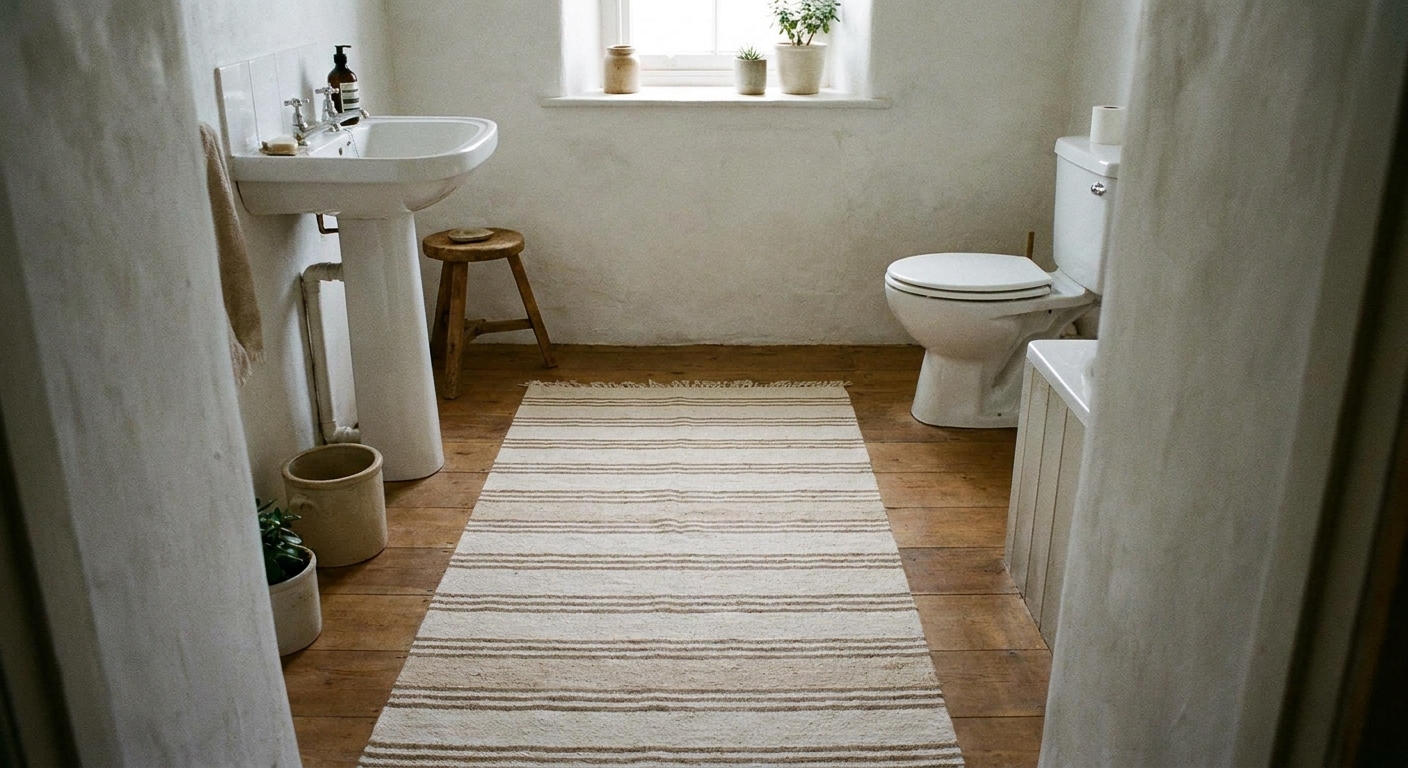
A simple rug plan
If you are overwhelmed, here is my default formula that works in a shocking number of tiny bathrooms:
- Use one runner or one medium rectangle as the main rug.
- Center it on the walkway and keep it parallel to the walls.
- Pick a light to mid-tone color with a low-contrast pattern or solid texture.
- Add a thin non-slip pad so it stays flat and looks tailored.
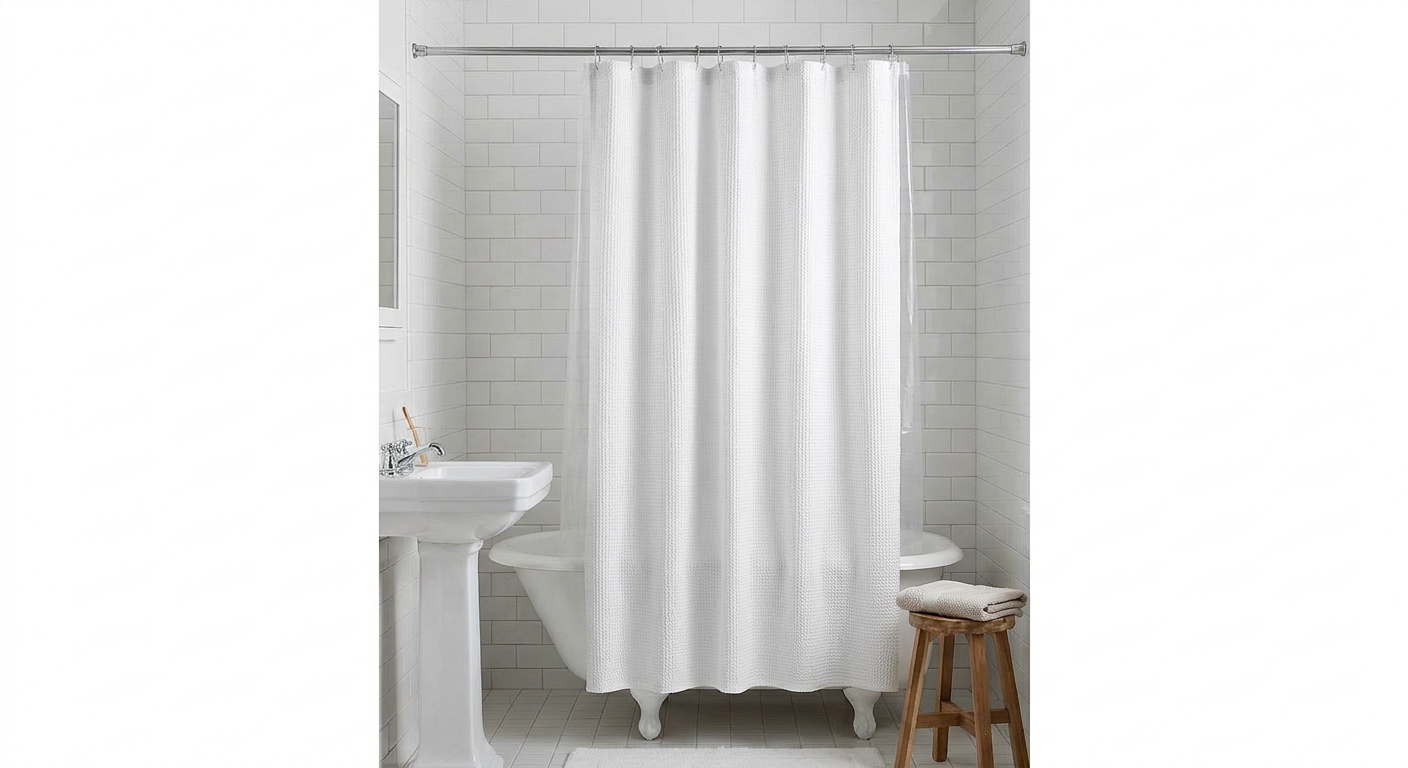
Once the rug is right, everything else in the room feels easier. If you want to keep the whole space feeling airy, pairing the rug with a few calm visual upgrades helps a ton. Two of my favorite renter-friendly reads are upgrade a builder-grade mirror without removing it and cheap ways to make your shower curtain look expensive and custom.
Quick FAQ
Should a bathroom rug go under the vanity?
Usually, no. Let the rug live in the open walkway so it reads as part of the room. A tiny bit of tuck under the front edge can look polished, but avoid pushing most of the rug under cabinetry where it can bunch.
Is it better to match the rug to the towels or the floor?
In a small bathroom, I like matching the rug more closely to the floor (or staying in the same color family) so the floor reads as more continuous. Then I add personality with towels and accessories.
Can a rug make a small bathroom look bigger if the tile is ugly?
Yes, especially if it is large enough and visually calm. A bigger rug reduces how much of the dated flooring you see, and it creates a cleaner visual field. If the floor is really bothering you, consider layering the rug approach with peel-and-stick tile so the entire room feels upgraded.