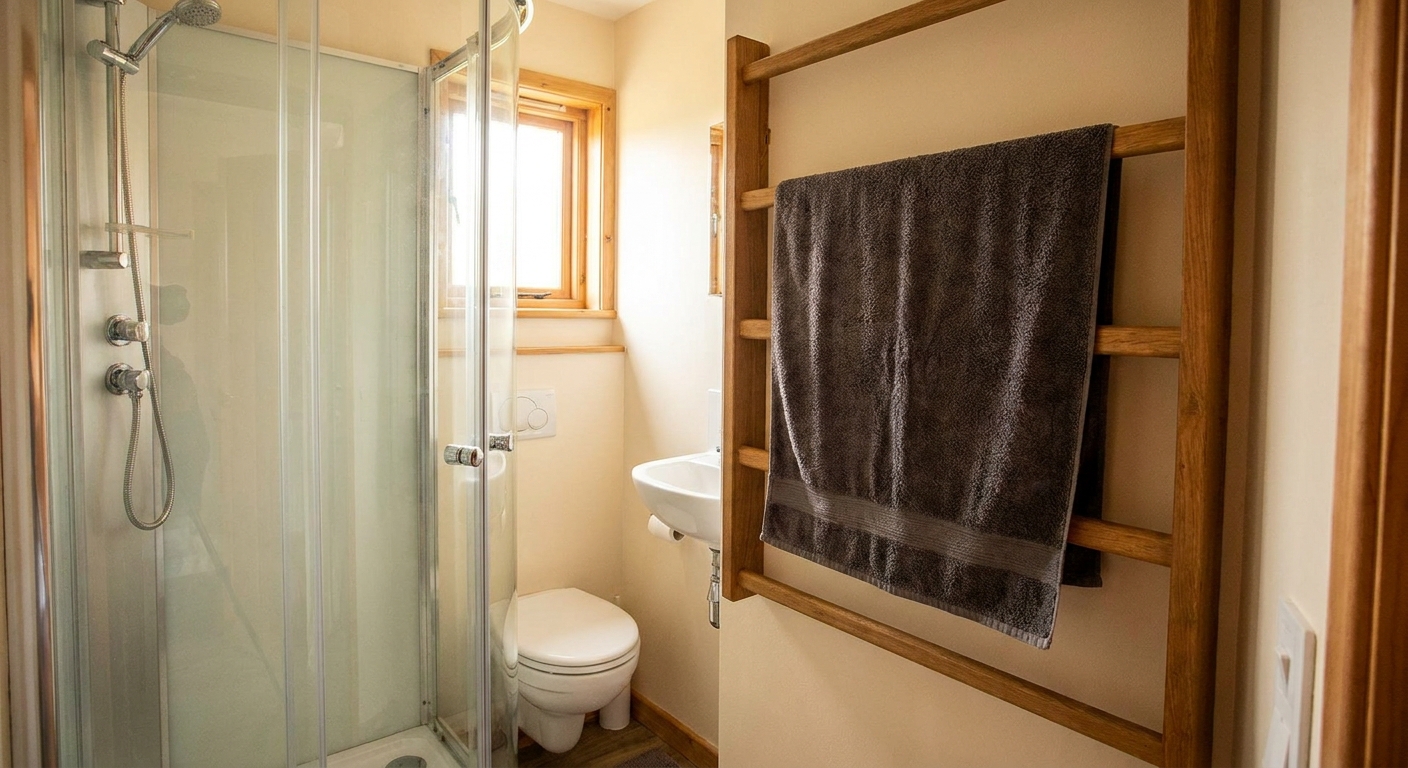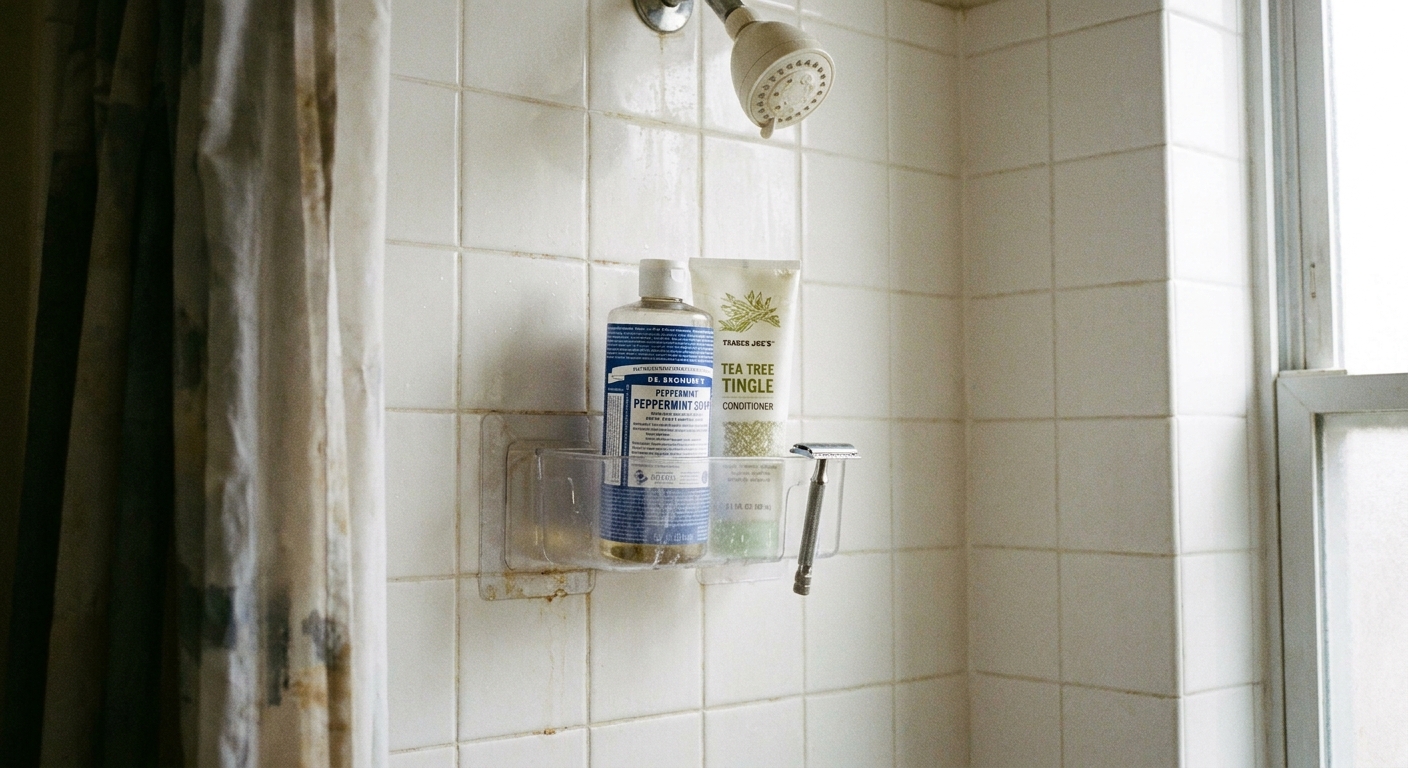

I have lived with the whole rental shower door situation: frosted glass with a weird pattern, gold trim that makes everything look yellow, and that permanent “ghost haze” from hard water that never fully goes away. If you cannot remove the door (or do not want to pick that fight with your lease), you can still make it disappear visually.
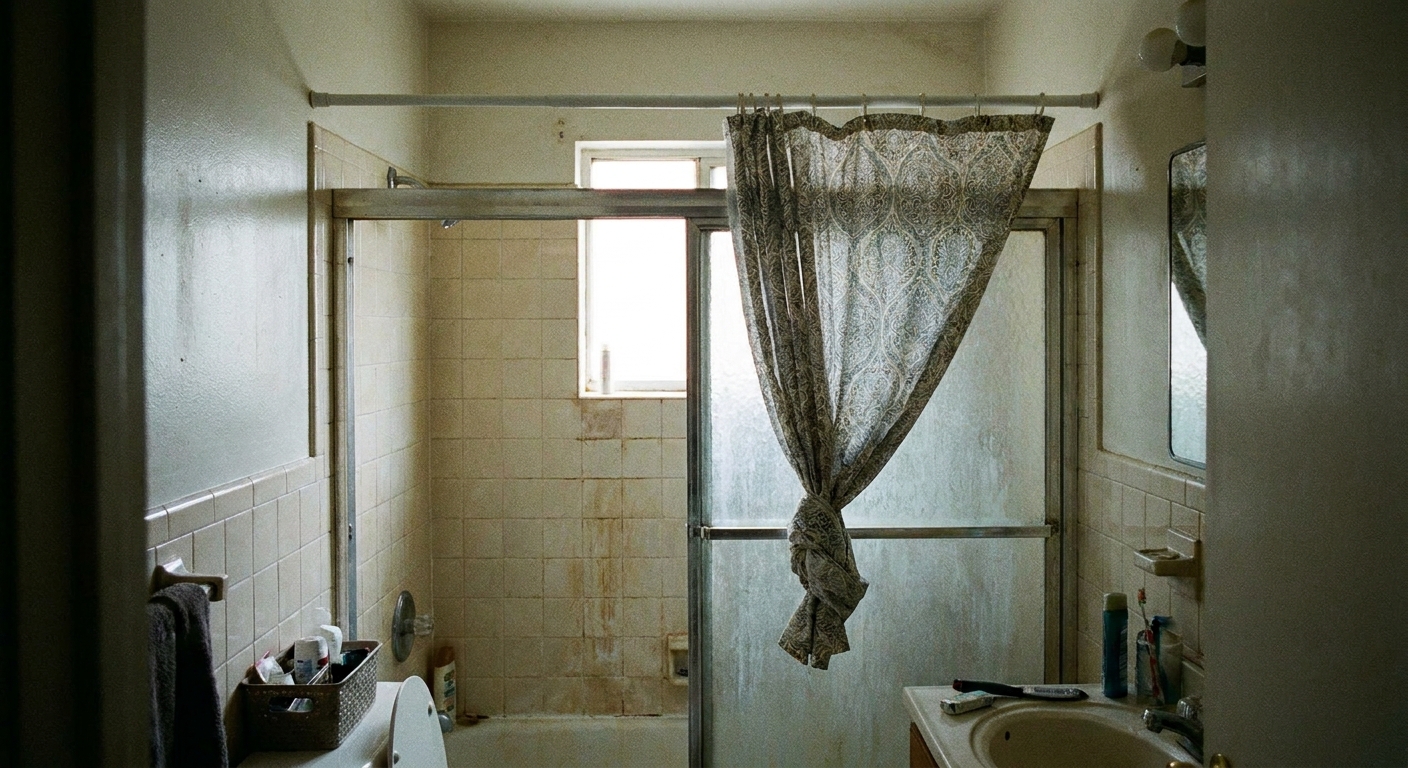
My favorite fix is a tension rod and a standard shower curtain hung in front of the glass. It hides the dated door, softens the look of the room, and it is completely reversible when it is time to move out.
Why this works
Glass doors read as a hard, shiny rectangle, especially when the frame is brass or the glass is cloudy. A curtain adds a clean vertical plane that feels intentional, like a hotel shower, and it lets you bring in color and texture without touching the tile or drilling anything.
- No drilling: no holes, no anchors.
- Usually no damage: tension rods can scuff paint or stress fragile surfaces if you overtighten, so go snug, not heroic.
- Instant style upgrade: the curtain becomes a focal point instead of the trim.
- Flexible coverage: you can hide the entire door or just the worst section.
- More “looks clean” impact: even if the glass is stained, the room reads fresher (including in photos).
What to buy
- One tension rod long enough to span the shower opening or the wall-to-wall area in front of the shower. Look for a sturdy rod that feels solid when you twist it tighter, and check the weight rating if you are using a heavier fabric curtain.
- One shower curtain (fabric or waffle weave reads more upscale than thin plastic).
- Optional liner: if you plan to shower with the door open and the curtain will act as the splash guard, use a liner inside the tub. If the glass door stays closed and contains the water, you may not need a liner, but do a quick test. If the fabric gets damp often, add a liner or switch to a faster-drying curtain.
- Optional curtain rings: I like rings with a smooth glide so you are not yanking on the rod every morning.
Quick sizing note: most standard shower curtains are about 72 inches long. If you hang the rod high (near the ceiling), you may prefer an extra-long length (often 84 inches) so it still reaches close to the tub rim.
If your bathroom stays humid, choose materials that dry quickly and wash easily. I talk more about what survives moisture in my humidity reality check here. The same “choose the right material, then ventilate” logic applies to curtains.
Method 1: Cover the whole door
This is the version that makes the glass door basically vanish.
Step 1: Pick a smart rod height
For the most polished look, mount the tension rod higher than the top of the glass, close to the ceiling but still reachable. Hanging curtains high makes small bathrooms feel taller, and it keeps your eye off that dated trim.
Before you commit, do a quick scan for obstacles. Avoid crown molding, soffits, or spots where the walls are uneven or not parallel (tension rods hate a weird angle).
Step 2: Place the rod on solid, safe surfaces
Extend the rod so it presses firmly into two opposing walls or into tile on both sides of the shower area. Avoid placing it where one end lands on a flimsy edge or a slippery painted drywall corner that gets steamy.
Stability tip: tile-to-tile can be great, but glossy tile can also be slick. Textured tile grips better. Either way, make sure the rubber end caps are clean, and do not overtighten on fragile tile glaze or fiberglass surrounds.
Step 3: Check clearance around handles and tracks
Stand back and make sure the curtain will hang far enough forward to clear door handles, sharp trim corners, and any sliding-door track. You want the fabric to drape, not snag.
Step 4: Hang it to skim the tub rim
You want the curtain to hover about 1/2 inch above the tub ledge or floor so it dries faster and does not wick water. If it is too long, hem it with iron-on hem tape or a simple stitch.
Step 5: Use the door like normal
Keep the glass door operational. The door contains water, and the curtain is mostly aesthetic. Slide the curtain open when you want more light, then close it for a clean look the rest of the time.
If you prefer showering with the door open: put a liner inside the tub, and keep the decorative curtain on the outside.

Method 2: Half-cover
If your bathroom is so tight that a full curtain feels bulky, you can cover only the section that looks worst, like the gold trim side or the permanently stained panel.
- Use a tension rod that spans only part of the opening, if you have a return wall or a niche area to press into.
- Choose a curtain panel or a narrow shower curtain and keep it mostly stationary.
- Pair it with a lighter color so the room still feels open.
This looks especially good when you have a pedestal sink or very little clearance in front of the shower. If that is you, you may also like these renter-friendly pedestal sink storage ideas.
Make it look intentional
Choose texture over busy print
Waffle weave, linen-look, or a simple stripe reads elevated. In small bathrooms, heavy prints can make the shower area feel like a billboard.
Match one detail in the room
Echo a color already present, like the bath mat, hand towel, or vanity. That tiny repeat is what makes it feel designed.
Keep it mostly closed
If the goal is to hide the door, treat the curtain like a wall. Leave a small gap only when you are airing it out.
Upgrade what you can see around it
Even one small change, like a prettier towel solution, helps the “new shower moment” feel cohesive. If you are short on wall space, this guide on where to hang wet towels in a tiny bathroom is my go-to.
Will it stay put?
Usually, yes, as long as you treat the tension rod like a piece of hardware, not a temporary spring stick. Also, do not place it anywhere it could fall onto someone while they are stepping out of the shower.
- Tighten it more than you think: if it slides with a gentle push, it will slip over time.
- Be surface-smart: tile can be a great anchor, but wipe it dry first so the end caps grip. If you only have painted drywall, aim for the most stable spot and do not crank it down.
- Ventilate: run the fan and crack the door after showers to help the curtain dry faster.
Common problems
The tension rod keeps falling
- Move it to a spot where both ends press into a more solid surface.
- Choose a heavier duty rod rated for longer spans.
- Reduce drag by using smoother rings so you are not yanking the rod each time you open the curtain.
The curtain billows into the shower
- If you are showering with the door open, add a liner inside the tub and keep the decorative curtain outside.
- Try a slightly heavier fabric curtain that hangs straighter.
It looks cramped
- Hang the rod higher (as long as the walls are parallel and the rod feels secure) and use a lighter curtain color.
- Choose a curtain with subtle vertical texture to visually stretch the room.
Upgrades that pair well
Once the door is hidden, the shower area is suddenly worth styling. Two easy add-ons:
- Rust-resistant organizers: keep the inside looking neat so you are not hiding clutter behind the curtain. I rounded up favorites here: best rust-resistant shower organizers for tiny bathtubs.
- Damage-free storage nearby: if you are short on places for skincare and extras, start with these damage-free wall storage hacks.
FAQ
Can I do this if my shower door slides?
Yes. Keep the glass door functional behind the curtain. The curtain is just the pretty outer layer.
Do I need to remove the glass door first?
No, and I usually would not. Removing doors can be a lease issue, and storing them safely in a small apartment is its own nightmare. This method avoids all of that.
What if the trim is sharp or sticks out?
Hang the curtain far enough forward that it does not snag. If your shower opening is shallow, choose a curtain that drapes softly instead of a stiff one that catches.
Will mold form behind the curtain?
It can if you keep everything closed and damp. The fix is simple: run the fan, pull the curtain partly open after showering, and wash the curtain regularly. Treat it like a bath towel, not like wall decor.