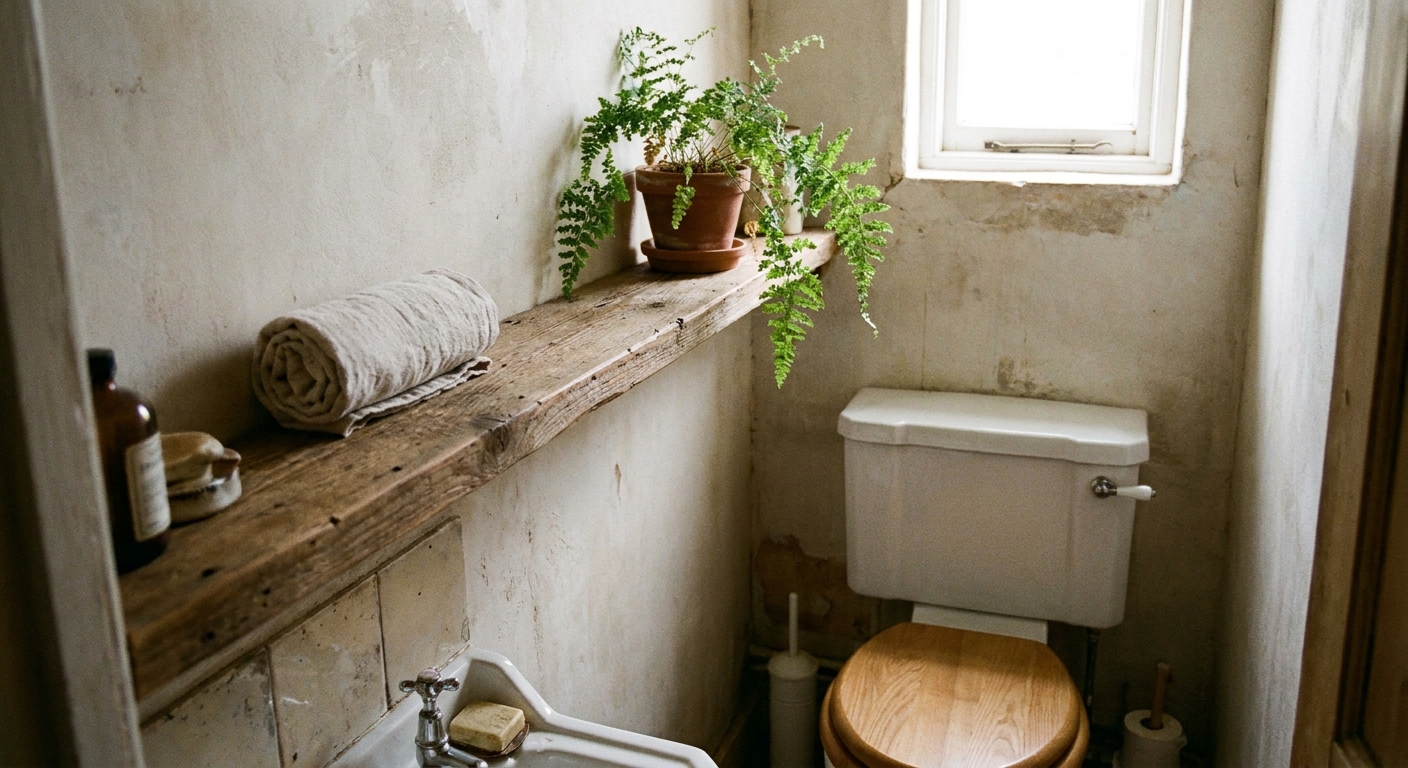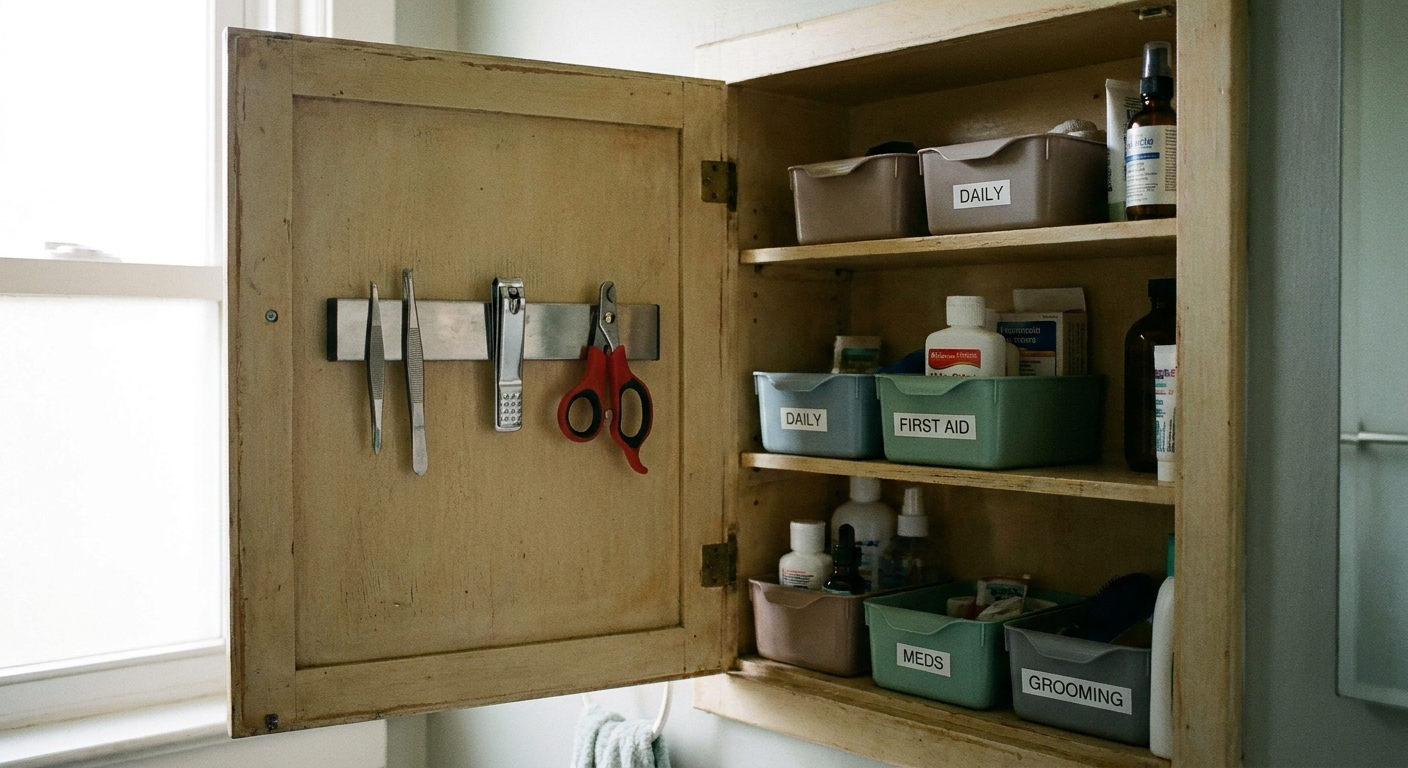

My first windowless bathroom was the size of a closet and lit by one very unromantic ceiling boob light. I still wanted that soft, spa-ish vibe that real greenery gives, but I also did not want to create a tiny moldy rainforest or a weekly guilt spiral of dead leaves.
The good news is that there are plants that can handle low light and bathroom humidity. The even better news is that you do not have to be a plant whisperer. You just need the right picks, the right containers, and one small routine that keeps everything happy.
What “windowless friendly” really means
A true windowless bath is challenging for two reasons:
- Low light: Most houseplants are not low light plants. They survive, but they do not thrive. Growth slows, soil stays wet longer, and rot becomes the main risk.
- Humidity swings: Steamy showers spike humidity, then the room dries out. Some plants love this, some hate it, and some do fine as long as the soil is not constantly soggy.
Also, “low light” is one of those terms that sounds more forgiving than it is. A practical gut-check: if you cannot comfortably read in there without flipping on the light, your plant is going to need that light too. And if your bathroom gets zero daylight, even tough plants will do best with a little supplemental help.
My rule: in a windowless bathroom, I choose plants that are forgiving about light and forgiving about missed care. Then I make the setup do the work.
Best plants for low light and humidity
These are the plants I recommend when you want real greenery in a bathroom with little to no natural light.
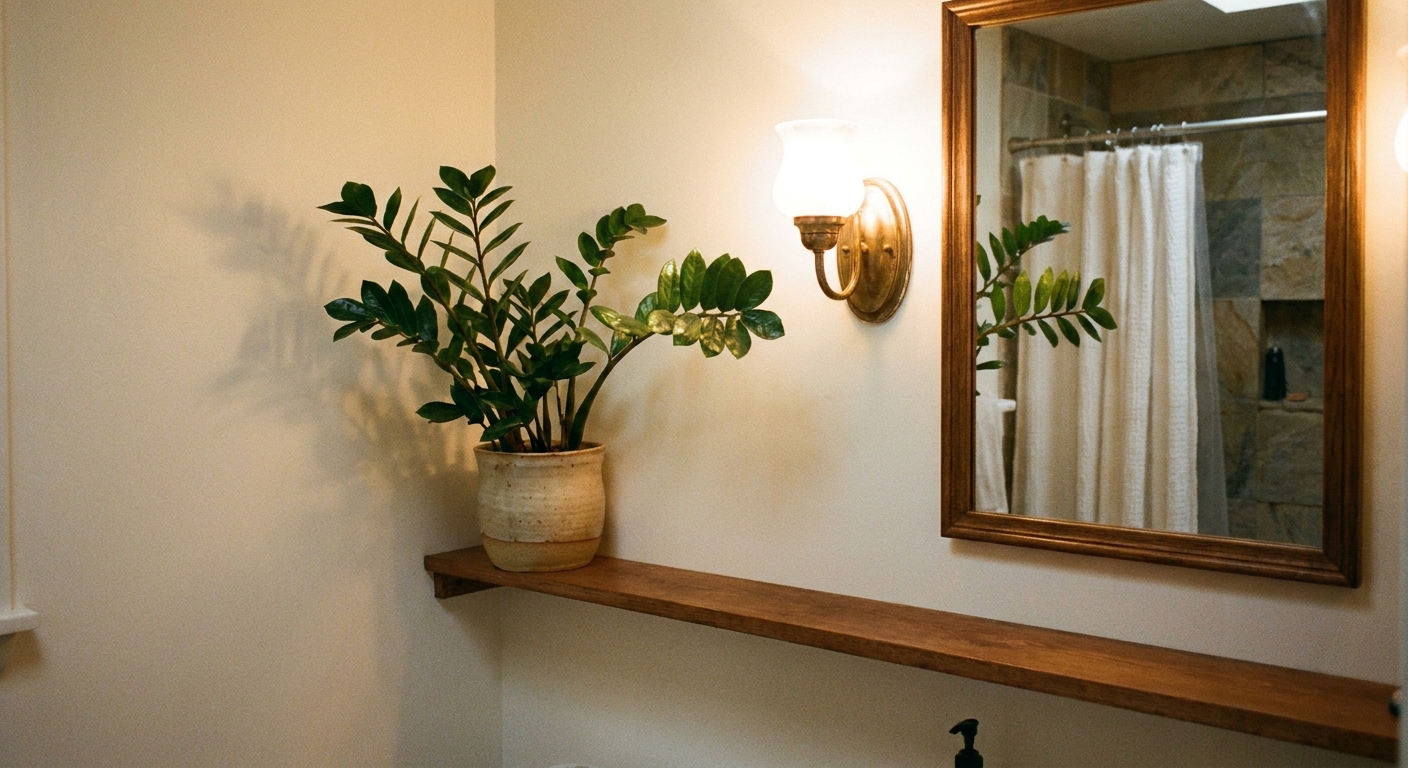
ZZ plant (Zamioculcas zamiifolia)
If I had to pick one plant for a windowless bath, it is the ZZ. It is slow-growing, glossy, and unbothered by low light. It also stores water in its thick rhizomes, so it can handle the “I forgot” weeks.
- Why it works: Extremely tolerant of low light, handles humidity fine.
- Care tip: Let soil dry out most of the way before watering. Overwatering is the main way people lose ZZ plants.
- Styling idea: A medium ZZ looks polished on an over-toilet shelf or a vanity corner tray.
Snake plant (Dracaena trifasciata, aka Sansevieria)
Snake plants are basically the renter-friendly plant equivalent of peel-and-stick tile: tough, good-looking, and hard to mess up. They tolerate low light and inconsistent watering. Humidity is a bonus, not a requirement.
- Why it works: Handles low light, prefers drying out, upright shape saves counter space.
- Care tip: Use a pot with drainage or treat it like a cactus. Water sparingly.
- Styling idea: Go tall and narrow to visually lift the room, especially if your bathroom feels boxy.
Pothos (Epipremnum aureum)
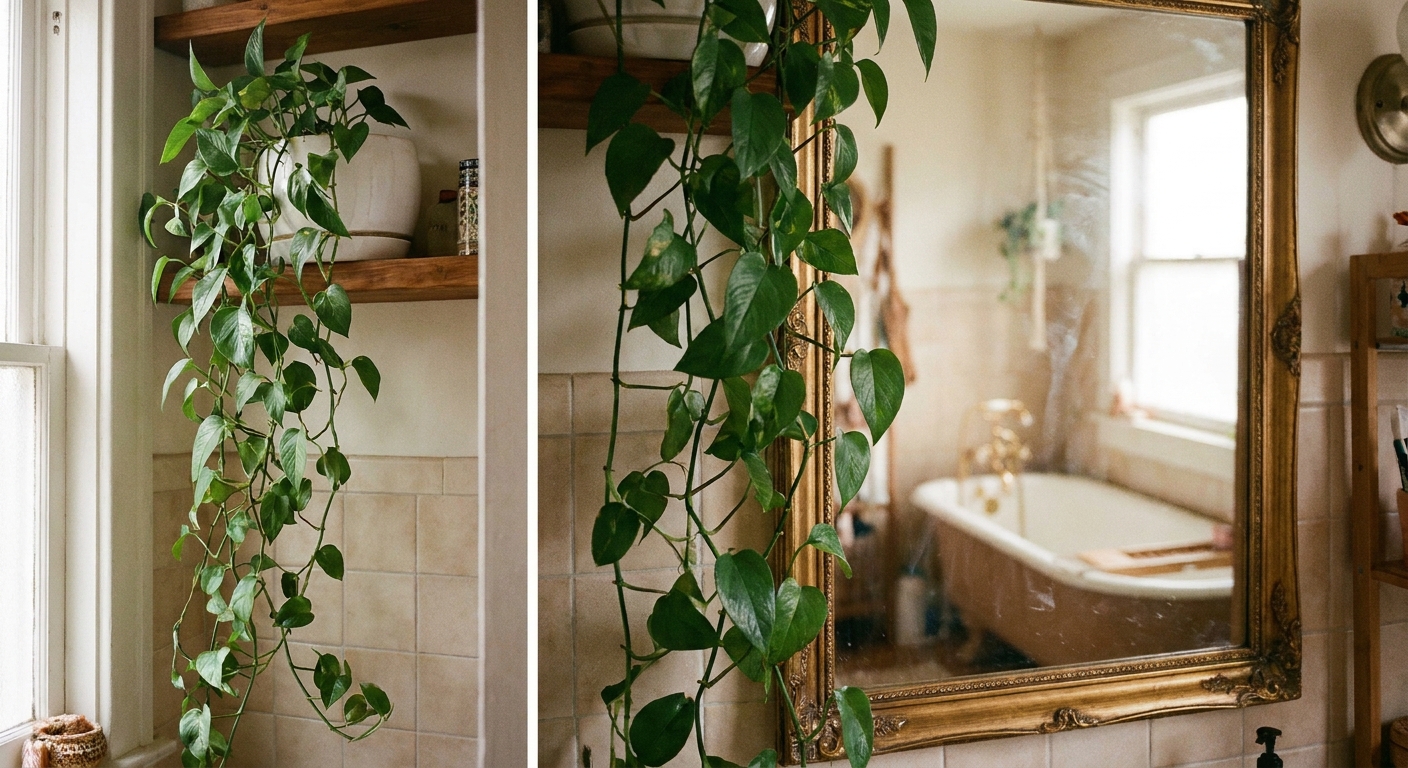
Pothos is my favorite for adding softness in a tiny bathroom because it drapes. It tolerates low light better than most trailing plants, and it likes humidity. It is also easy to trim and propagate if it gets leggy.
- Why it works: Trailing habit gives instant “styled” impact, humidity-friendly.
- Care tip: In low light, let the top 2 to 3 inches of the pot dry before watering again.
- Styling idea: Put it on a high shelf so the vines frame the mirror.
Heartleaf philodendron (Philodendron hederaceum)
Similar to pothos, but slightly moodier and a little more velvety looking. It does well in low to medium light and appreciates a humid bathroom. If you want a softer, less variegated look, this is it.
- Why it works: Low-light tolerant, forgiving, thrives with consistent warmth.
- Care tip: Pinch back tips to encourage fullness.
Cast iron plant (Aspidistra elatior)
The name is accurate. This plant is famously tolerant of low light and neglect. It is not trendy-cute in a tiny pot, but it is a hero plant for a bathroom that eats everything else.
- Why it works: Very low light tolerant, steady and slow, not fussy about humidity.
- Care tip: Do not overwater. Slow growers stay wet longer in dim rooms.
Peace lily (Spathiphyllum)
If you want something that looks lush and “spa,” a peace lily can work in a bathroom, especially if you can give it a little help from a grow bulb. It enjoys humidity and will dramatically droop when thirsty, which is honestly helpful. In very low light it may stop flowering, but it can still look full and pretty.
- Why it works: Likes humidity, tolerates low light (but blooms best with brighter light).
- Care tip: Keep soil lightly moist, not soaked. Empty any cachepot water.
- Styling idea: One larger peace lily on a stool makes a tiny bathroom feel intentional.
Bird’s nest fern (Asplenium nidus)
This is a great “humidity lover” if you can offer moderate low light and you are willing to water a little more consistently than with a snake plant. The rippled leaves look expensive and hotel-like.
- Why it works: Loves humidity, prefers indirect light, great texture.
- Care tip: Water the soil, not the center “nest,” to avoid rot.
Chinese evergreen (Aglaonema)
Aglaonemas are underrated for bathrooms. Many varieties tolerate low light, and the patterned leaves read decorative even when the plant is not huge.
- Why it works: Low-light tolerant, attractive foliage, handles indoor conditions well.
- Care tip: Let the top couple inches dry. Avoid cold drafts from a strong exhaust fan vent in winter.
Lucky bamboo (Dracaena sanderiana)
If you want greenery with almost no footprint, lucky bamboo in water can be a smart move. It tolerates low light, but in a truly windowless bathroom it tends to do better with a grow bulb or if it can borrow light from a nearby room.
- Why it works: Can live in water, small-scale friendly, easy to keep tidy.
- Care tip: Use distilled or dechlorinated water if your tap water is harsh, and change it regularly.
Bonus: Air plants (Tillandsia)
Air plants are often sold as “no light needed,” which is not true. They still need bright indirect light to really thrive. In bathrooms they can do well if they are near a light source (or you add a grow bulb nearby) and you appreciate the humidity.
- Why it works: Loves airflow and periodic moisture, cute for tiny ledges.
- Care tip: They still need occasional soaking and then thorough drying.
Quick safety note: If you have pets or tiny kids, assume chewing is a possibility. Common bathroom-friendly houseplants like ZZ plant, pothos, philodendron, peace lily, snake plant, and aglaonema are widely considered toxic if eaten. Keep them up high, or choose a pet-safe alternative for low shelves.
The easiest fix: a tiny grow light
If your bathroom has zero natural light, even the toughest plants will eventually stall. The simplest fix is a small, renter-friendly grow bulb. You do not need a complicated setup.
- Option 1: A grow bulb in a regular lamp (on a timer). Put the lamp on a shelf or over-the-toilet unit.
- Option 2: A small clip-on grow light aimed at one or two plants.
- Timing: Aim for about 8 to 12 hours a day on a timer so you never think about it again.
If you are also upgrading your lighting for the whole room, I have more renter-friendly options here: renter-friendly bathroom lighting ideas.
How to style plants without clutter
Plants can either make a small bathroom feel curated or make it feel crowded. These are my go-to tiny-bath moves.
Think vertical first
- Use one taller plant (snake plant, cast iron plant) to draw the eye up.
- Use one trailing plant (pothos or heartleaf philodendron) from a higher point to soften hard lines.
Use bathroom-proof containers
- Best: glazed ceramic, glass, or a plastic nursery pot inside a cachepot.
- Concrete is fine: as long as it is properly sealed. Many “concrete look” pots are porous and can leave mineral rings in humid rooms.
- Avoid: unsealed terracotta in very humid bathrooms if you hate water rings and mineral stains.
Hide the plant mess
I love a clean counter, so I corral plant accessories in closed storage. If your vanity is chaotic, this helps a lot: declutter and organize your medicine cabinet.
Choose one plant zone
Pick one spot that makes sense and commit:
- Over-the-toilet shelf: Great for a pothos drape.
- Back of the toilet tank: Only for a small, stable pot that cannot tip.
- Vanity corner: Works best with a narrow pot footprint.
- Shower zone: Only if the plant is out of direct spray and you have airflow.
If you are short on surfaces, add storage before you add plants. These damage-free wall storage hacks create little landing zones without drilling.
Low-effort care routine
This is the routine that keeps bathroom plants alive even when your week is chaos.
1) Prioritize drainage
If you only do one thing, do this. Use a pot with a drainage hole, or keep the plant in its nursery pot and set it inside a cute cachepot. Water at the sink, let it drain fully, then put it back.
2) Use a fast-draining potting mix
Rot prevention is the whole game in dim rooms. I like an indoor potting mix that is not too dense. If yours holds water forever, cut it with orchid bark, perlite, or pumice so roots can breathe.
3) Water less than you think
Low light equals slow growth, which equals slower drying. In most windowless bathrooms, overwatering is the main issue, not underwatering.
4) Run the fan and crack the door
Humidity-loving does not mean stagnant-air loving. Good airflow helps prevent mildew on soil and keeps fungus gnats down. If your fan cover is dingy (mine always are), this quick refresh helps the whole ceiling look cleaner: fix a yellowed bathroom exhaust fan cover.
5) Wipe leaves monthly
Dust happens even in bathrooms. A quick wipe with a damp cloth helps plants photosynthesize under weak light.
6) Keep them away from the bad stuff
Try not to park plants right next to heat vents or radiators, and keep them out of the splash zone when you are using strong cleaners. “Spa vibe” disappears fast when your leaves look chemically crispy.
7) Fertilize lightly, if at all
In low light, plants do not use much fertilizer. If you fertilize, do it sparingly during spring and summer.
Common problems and quick fixes
Yellow leaves
- Most likely: Overwatering.
- Fix: Let it dry more between waterings, and make sure no water is sitting in the cachepot.
Leggy, stretched growth
- Most likely: Not enough light.
- Fix: Add a small grow light or move the plant to a brighter room for part of the week.
Mold on soil
- Most likely: Soil staying wet plus low airflow.
- Fix: Remove the top layer of soil, let the pot dry, and increase airflow. Consider bottom watering in the sink to keep the surface drier.
Fungus gnats
- Most likely: Constantly damp soil.
- Fix: Let soil dry further between waterings, and avoid letting water pool in saucers.
Brown tips on ferns or peace lilies
- Most likely: Inconsistent watering or mineral-heavy tap water.
- Fix: Keep moisture more consistent and try filtered water if your water is very hard.
If you only get one plant
For a truly windowless bathroom, my top pick is a ZZ plant in a medium pot with good drainage, paired with a simple timer grow bulb if you can swing it. It looks polished, it does not sprawl into your precious square inches, and it will not punish you for having a life.
And if your bathroom currently has nowhere to put a plant without sacrificing counter space, start with storage first. A calm bathroom always looks more “decorated,” even before the greenery goes in.